Sundarban Tour for Photography Lovers – Capture Moods of the Mangroves
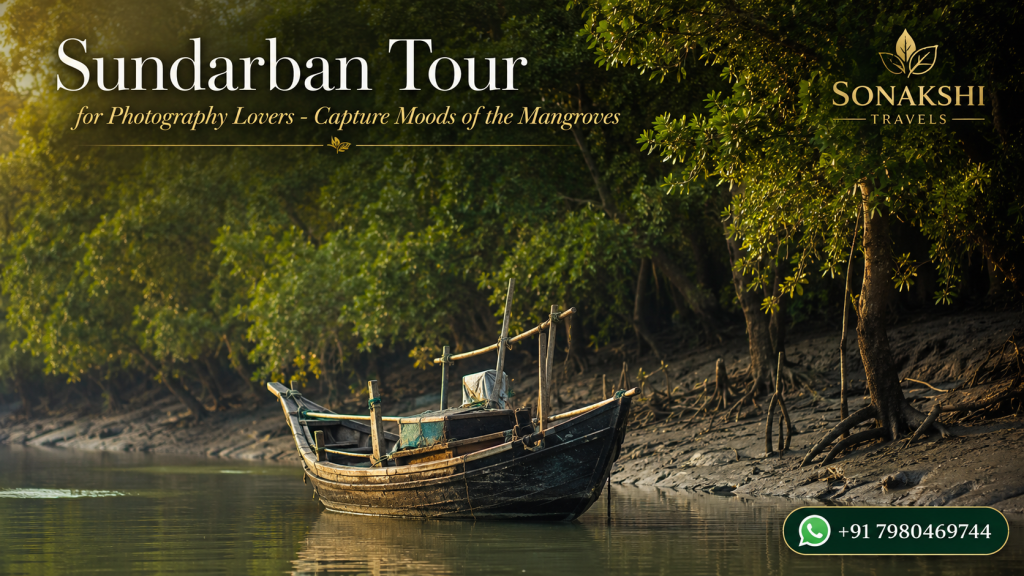
A photography journey in the Sundarbans is not only about capturing a tiger, a boat, a river, or a bird. It is about understanding a living landscape where silence has shape, water has movement, and light changes the emotional character of every frame. For photography lovers, a Sundarban tour becomes a slow visual study of mangroves, tidal rhythm, muddy banks, distant calls, animal patience, and the deep stillness of an estuarine forest.
The Sundarbans does not always reveal itself through dramatic moments. Much of its beauty stays in quiet details. A line of mangrove roots rising from wet mud, a heron standing motionless beside the river edge, the soft curve of a boat moving through brown water, or the reflection of leaves on a narrow creek can become powerful photographs when seen with attention. This is why the region is highly meaningful for photographers who prefer mood, atmosphere, and natural storytelling over hurried sightseeing.
Photography in the mangroves asks the traveller to observe before clicking. The forest is not a fixed background. It is a breathing environment shaped by tide, light, shadow, bird movement, animal caution, and human silence on the water. A thoughtful Sundarban travel experience allows the camera to become more than equipment. It becomes a patient eye that records the behaviour of an entire ecosystem.
The Visual Personality of the Mangrove Landscape
The first attraction for a photography lover is the unusual structure of the mangrove forest itself. Unlike ordinary forests where trees rise from dry land, the Sundarbans stands between land and water. The forest floor is often muddy, wet, and exposed to tidal change. The roots are visible, complex, and sculptural. They rise from the surface like natural patterns, creating strong foreground elements for landscape photographs.
Mangrove roots give the Sundarbans its special visual identity. They are not just ecological features; they are natural design elements. Their repeated forms create rhythm in a frame. Their sharp vertical lines contrast with the soft horizontal movement of river water. When photographed carefully, they help express the difficult life of plants that survive in saline, tidal, and unstable ground.
The rivers and creeks add another visual layer. They do not behave like simple water bodies. Their colour, texture, and surface mood change constantly. Sometimes the water looks calm and reflective. Sometimes it carries small ripples made by wind, boat movement, or tide. For a photographer, this water is important because it joins the sky, forest, boat, and animal movement into one composition.
The mangrove canopy also creates a layered background. Dense foliage, open gaps, hanging branches, and shaded creek mouths offer many framing possibilities. A bird sitting on a branch becomes more interesting when the background carries soft green depth. A boat looks more poetic when it passes through a corridor of trees. A mudbank becomes meaningful when the roots, waterline, and reflected light are arranged with care.
Why Silence Matters in Sundarban Photography
Silence is one of the strongest photographic elements in the Sundarbans. It cannot be seen directly, but it can be expressed through composition. A still river, an empty creek, a lone bird, or a distant boat can show the quiet character of the forest. Many good photographs from the region are not crowded with action. They are powerful because they hold space.
In wildlife and landscape photography, silence helps the photographer read movement. When the boat slows down and conversation reduces, small signs become visible. A branch shakes slightly. A kingfisher changes position. A deer looks toward the forest line. A crocodile-shaped form on a mudbank becomes clearer. These moments require attention, not speed.
The silence of the Sundarbans also has psychological value. It makes the photographer feel the scale of the forest. In many places, the viewer is surrounded by water, mud, trees, and distance. There are no city sounds, no road lines, and no clear boundary between land and river. This creates a feeling of mystery that can be translated into images through negative space, soft focus, muted tones, and careful framing.
Photography lovers should understand that the Sundarbans rewards quiet observation. The most meaningful images often come from waiting. A photographer may spend several minutes watching a single river bend, a mudflat, or a shaded root system. The frame slowly improves as light shifts, a bird enters, or a ripple changes the water texture. This slow process is central to the mood of a Sundarban tour from Kolkata when the purpose is visual storytelling.
Light as the Main Storyteller
Light controls the emotional tone of every photograph in the mangroves. In the Sundarbans, light often arrives in broken patterns because it passes through leaves, branches, creek openings, and river mist. This creates soft highlights and natural shadows. For photography lovers, these light patterns are more important than strong brightness.
Side light can reveal the texture of roots and bark. Backlight can create a glowing outline around leaves or birds. Reflected light from the river can gently brighten the lower parts of a boat or mudbank. Diffused light can make the forest look calm and painterly. Each lighting condition gives a different emotional meaning to the same location.
The most useful approach is to look for contrast between light and shadow without making the image too harsh. The Sundarbans has a naturally muted colour palette. Brown water, grey mud, deep green foliage, pale sky, and weathered wooden boats form a quiet visual language. Over-processing can damage this mood. A more honest photograph respects the softness and restraint of the place.
Light also helps direct the viewer’s eye. A small bright patch on a creek mouth can become the centre of attention. A bird in shadow may look mysterious, while the same bird in clean light may look documentary. A boat placed against a glowing background can become a strong travel image. The photographer’s task is to notice how light selects subjects before the camera does.
Wildlife Photography Beyond the Tiger Frame
Many people connect Sundarban photography only with the Royal Bengal Tiger. The tiger is certainly the most powerful symbol of the forest, but photography lovers should not limit their vision to one rare subject. The deeper value of the Sundarbans lies in its complete wildlife atmosphere. Birds, crocodiles, deer, monitor lizards, crabs, mudskippers, insects, and animal tracks all help tell the story of the mangrove ecosystem.
A deer standing near the edge of the forest can express alertness. A crocodile resting on mud can show prehistoric stillness. A kingfisher diving from a branch can show speed and precision. A flock of egrets rising from a creek can bring movement into a wide landscape frame. Even the absence of animals can be meaningful when the photograph shows signs of life, such as footprints, disturbed mud, broken vegetation, or sudden bird movement.
Wildlife photography in this region is based on distance and respect. Animals are often seen from boats, across water channels, or near protected forest edges. This distance should not be treated as a weakness. It gives the image context. Instead of producing only close portraits, the photographer can show how animals belong to the mangrove setting. A small deer inside a large frame of roots and water may say more about the Sundarbans than a tight close-up.
A responsible Sundarban travel with guide and meals experience also supports better observation because the focus remains on safe, patient movement through the river routes. For photography, guidance is useful not only for identifying species, but also for reading behaviour. A guide may notice bird calls, animal direction, tide movement, or a quiet bank where wildlife activity is more likely to appear.
Birds, Wings, and the Art of Quick Observation
Bird photography in the Sundarbans is highly rewarding because birds bring colour, motion, and sound into the landscape. The mangrove environment supports many bird species that use branches, mudflats, creek edges, and open water. For a photographer, birds are valuable subjects because they appear in many visual situations. They may sit still, fly low over the river, hunt near the water, or gather on exposed banks.
The challenge is timing. Birds rarely wait for perfect composition. A photographer must observe posture, direction, and background quickly. A bird facing toward open space usually creates a more balanced frame. A bird placed against a clean patch of water or soft foliage is easier to read. If the background is too busy, the subject loses strength.
Birds also help show scale. A small bird on a large root system reveals the structure of the mangroves. A flying bird above a wide river expresses openness. A group of birds on a mudflat shows the feeding value of the tidal edge. These frames are not only beautiful; they also explain how life uses the forest.
For photography lovers, patience is essential. A kingfisher may return to the same branch. An egret may move slowly along a bank. A raptor may circle above the tree line. Waiting for the right body angle, wing position, or eye contact can make a simple bird photograph much stronger. This method fits naturally with the slow mood of Sundarban travel itinerary planning when photography is the main creative purpose.
Composing the River as a Living Subject
In Sundarban photography, the river should not be treated only as empty space. It is one of the main subjects. The river carries the forest’s rhythm. It decides distance, reflection, movement, and perspective. A wide river can create a sense of vastness, while a narrow creek can create intimacy and mystery.
Strong river compositions often use leading lines. The curve of a creek can guide the eye into the frame. The edge of a boat can point toward the forest. The meeting line between water and mud can create visual balance. Reflections can double the shape of trees and make the image feel calm.
Boat movement also affects composition. A moving boat creates changing angles every few seconds. A branch that appears cluttered from one position may become beautifully framed moments later. A mudbank may open into a clean horizontal line. A bird may shift from a dark background to a bright one. The photographer needs to stay alert and ready, but not restless.
The river also gives emotional depth. A lone boat in a wide channel can express human smallness. A forest wall reflected in brown water can show the union of land and tide. A shaded creek mouth can create suspense. Through careful framing, the river becomes a storyteller that carries the mood of the mangroves.
Human Presence in a Natural Frame
Human presence in Sundarban photography should be handled with dignity and restraint. Fishermen, boatmen, guides, cooks, and local river workers are part of the region’s lived reality. Their presence can add scale, culture, and emotional warmth to a visual story. However, the focus should remain respectful and connected to the landscape.
A boatman standing quietly at the edge of a deck, a cook preparing food inside a simple boat kitchen, or a guide scanning the forest line can become powerful documentary frames. These images show how people move carefully within a difficult tidal world. They also help viewers understand that the Sundarbans is not only wilderness; it is also a human-water relationship shaped by caution and knowledge.
For photography lovers, such images work best when they are natural, not staged. The strongest frames often come from real work, quiet gestures, and honest moments. A hand holding a rope, a face looking toward the river, or a silhouette against the forest can express connection without needing explanation.
When visual storytelling is the priority, a Sundarban private tour may offer more time and space for careful observation. The value is not luxury alone. The value is the ability to slow down, compose thoughtfully, and avoid the rushed feeling that weakens serious photography.
Texture, Pattern, and Small Details
The Sundarbans is rich in small details that are easy to miss. Mud texture, crab holes, salt marks, leaf patterns, broken shells, wet roots, rope fibres, wooden boat surfaces, and water ripples can all become strong photographic subjects. These details help create a complete visual essay.
Close detail photographs are important because they balance wider landscape images. A full photo story should not contain only broad river views. It should also include the small textures that explain the environment. The rough surface of bark, the shine of wet mud, the pattern of pneumatophores, or the curve of a leaf can reveal the physical character of the mangrove world.
Such images also support research-driven storytelling. Mangrove roots are not decorative accidents. They help trees breathe in waterlogged soil. Mudflats are not empty surfaces. They are feeding grounds for small creatures and birds. Crab holes are not random marks. They show active life below the surface. When the photographer understands these meanings, the images become more intelligent.
Detail photography also helps when wildlife activity is slow. Instead of feeling disappointed, the photographer can study the environment more deeply. The Sundarbans always offers visual material, but it asks the eye to become sensitive. In this sense, a photography-focused Sundarban travel guide for beginners should teach observation before equipment settings.
Creating a Visual Story, Not Only Single Images
A strong photography journey should produce a visual story. Single beautiful images are valuable, but a complete story gives the viewer a deeper sense of place. In the Sundarbans, this story can begin with the river, move into mangrove details, show bird activity, include human presence, and end with quiet evening-like softness on the water.
The sequence matters. A wide opening photograph can establish the landscape. A medium frame can show a boat, bank, or creek. A close detail can explain texture. A wildlife image can introduce life. A human frame can add scale. A final atmospheric image can leave the viewer with mood. This structure helps the photographer present the Sundarbans as a living experience, not a collection of unrelated shots.
Good visual storytelling also avoids repetition. Ten similar river photographs may weaken the album. Instead, each image should add a new layer. One photograph may show movement, another silence, another texture, another behaviour, another relationship between people and forest. This approach is especially useful for bloggers, travel brands, and serious hobby photographers who want meaningful content from their journey.
For content creators, a carefully observed Sundarban tour package should be understood not only as travel arrangement, but as an opportunity to build a visual archive of mood, ecology, and place identity. The photography goal should remain clear from the beginning: to capture how the mangroves feel, not only how they look.
The Discipline of Slow Photography
The Sundarbans teaches slow photography. It does not always offer instant reward. A photographer may wait for long periods without a major wildlife sighting. Yet during that waiting period, the forest continues to change. The light moves, the water shifts, birds call, branches sway, and the mood deepens. Slow photography means respecting these subtle changes.
This discipline is especially important because the Sundarbans can be visually complex. Too many roots, branches, reflections, and shadows may confuse a frame. The photographer must simplify. This can be done by choosing one clear subject, using natural lines, waiting for separation between subject and background, or allowing empty space to create calm.
Slow photography also reduces the pressure of expectation. If the photographer only wants rare wildlife, many moments may feel unsuccessful. But if the aim is to capture the moods of the mangroves, then every part of the journey becomes useful. The wake behind the boat, the stillness of a creek, the watchful posture of a bird, and the fading reflection of trees can all become meaningful.
This is where photography becomes a form of learning. The camera trains the traveller to notice relationships: water and root, silence and movement, animal and distance, light and shadow, human and forest. A thoughtful Sundarban travel safety mindset also supports this discipline because calm behaviour, respectful distance, and controlled movement are essential for both safety and better images.
Editing with Honesty and Natural Mood
The final character of Sundarban photography is also shaped during editing. The region has its own natural colour language. It does not need excessive saturation, artificial skies, or dramatic filters. Honest editing preserves the quiet strength of the mangroves. It keeps the brown water natural, the greens balanced, the shadows soft, and the wildlife believable.
Editing should improve clarity, not replace reality. Slight correction of exposure, contrast, sharpness, and colour temperature may help the image express what the eye experienced. But heavy manipulation can make the Sundarbans look false. The beauty of this landscape lies in restraint. Its power comes from silence, depth, and ecological seriousness.
Black-and-white editing can also work for certain frames, especially when the subject is root pattern, boat silhouette, river mist, or human posture. Without colour, the viewer pays more attention to shape, contrast, and emotion. However, colour images remain important because the green-brown palette is part of the Sundarbans’ identity.
For professional travel content, honest editing builds trust. Viewers should feel that the photograph represents a real place. This is especially important when photography supports travel writing, brand communication, or conservation-aware storytelling. A responsible image should invite people to appreciate the mangroves, not mislead them with fantasy.
Photography as Respect for the Mangrove World
The best Sundarban photographs are not taken with a conquering attitude. They are made with respect. The forest is sensitive, tidal, and alive. Wildlife is cautious. Local people depend on river knowledge. The landscape has its own pace. A photographer who understands this will create more meaningful images than one who only searches for spectacle.
Respect changes the way the camera is used. It encourages distance from wildlife, quiet movement on the boat, patient framing, and attention to small signs. It also prevents the photographer from treating the forest as a decorative background. The mangroves are the main subject. Every animal, boat, person, and reflection belongs within that larger ecological frame.
This respectful approach gives emotional weight to the images. A photograph of a quiet creek becomes more than scenery. It becomes a record of tidal life. A bird on a branch becomes more than a species image. It becomes part of a wetland story. A root pattern becomes more than texture. It becomes evidence of survival in a difficult environment.
For photography lovers, this is the real reward of the Sundarbans. The camera returns with images, but the mind returns with a new way of seeing. The traveller begins to understand that the strongest frame is not always the most dramatic one. Sometimes it is the calmest frame, the one that carries the silence of the mangroves with honesty.
A Sundarban tour for photography lovers is a journey into mood, patience, and ecological observation. It is not only a search for rare wildlife. It is a careful study of roots, rivers, birds, boats, mud, reflections, shadows, and silence. The mangroves do not always speak loudly, but they offer endless visual meaning to those who slow down and look carefully.
The true photographic beauty of the Sundarbans lies in its restraint. It is found in soft light on water, in the watchful stillness of animals, in the sculptural form of mangrove roots, and in the quiet movement of boats through tidal channels. A thoughtful photographer learns to capture not only scenes, but feelings: suspense, calm, distance, patience, and wonder.
For anyone who wants to build a meaningful visual memory of the mangrove forest, the purpose should be clear. Do not chase only the famous image. Observe the whole environment. Let the river guide the composition. Let silence shape the frame. Let the forest reveal itself slowly. In that patient process, the Sundarbans becomes one of the most powerful landscapes in India for photography lovers who want to capture the living moods of the mangroves.