Updated: April 19, 2026
Dibru-Saikhowa National Park: A Jewel in Assam’s Wilderness
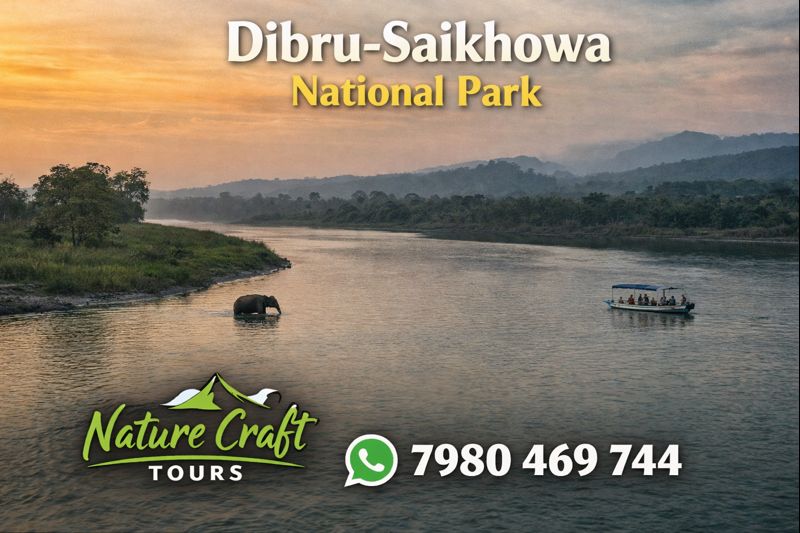
Dibru-Saikhowa National Park is one of the most distinctive protected landscapes in Northeast India because it is shaped not only by forest and wildlife, but also by water, shifting landforms, flood cycles, river islands, marshes, and grass-dominated wet habitats. Located in Assam, in the dynamic floodplains influenced by the Brahmaputra and Lohit river systems, this national park offers a very different wildlife experience from the better-known dry forest reserves of central and western India. Here, the mood of the landscape changes with water level, season, sunlight, mist, and river movement. That is why Dibru-Saikhowa feels alive in a particularly fluid and ecological sense. It is not simply a place to see animals. It is a place to understand how floodplain wilderness works.
Covering about 340 square kilometers, Dibru-Saikhowa is often described as one of India’s most important riverine national parks. It is also recognized as a Biosphere Reserve, which reflects its ecological importance beyond tourism. Wetlands, swamps, grasslands, riverine forest, and semi-evergreen woodland combine to create a habitat mosaic that supports mammals, reptiles, aquatic life, and an exceptionally rich bird population. The park is especially valued by birdwatchers because of its large number of resident and migratory species, but its importance goes much further. Feral horses, Gangetic river dolphins, water buffalo, river-edge reptiles, and the wider wetland food chain together make the park ecologically remarkable.
Dibru-Saikhowa is best understood as a living floodplain ecosystem. Seasonal flooding does not merely disrupt the landscape here. It builds, reshapes, renews, and sustains the habitats that make the park so biologically rich.
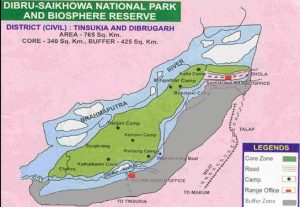
For travelers, the appeal of the park lies in this layered experience. A visit can include birdwatching at dawn, boating through silent channels, looking for dolphins in the river, scanning open grass tracts for horses, and observing how moisture, sediment, and vegetation define wildlife presence. There is beauty here, but it is not a decorative beauty. It is ecological beauty, built from habitat diversity, biological rhythm, and the sense that land and water are in constant conversation.
History and Overview
Dibru-Saikhowa was declared a wildlife sanctuary in 1986 and later upgraded to a national park in 1999. This progression reflects the growing recognition of the park’s ecological significance, especially as a major wetland and floodplain system in Northeast India. The area was protected because it supports rare and threatened species, important bird habitat, and a riverine landscape type that is both productive and fragile. Wetland ecosystems are often underestimated because they do not always resemble dramatic mountain forests or iconic tiger reserves, but in reality they sustain enormous biological richness.
The park lies in Tinsukia district and is strongly influenced by the greater Brahmaputra basin. Its location close to major rivers means that the geography is never static. Islands, sandbars, marsh zones, reeds, grasslands, and floodplain forest patches all evolve over time. Such instability may sound difficult from a tourism perspective, but from an ecological perspective it is one of the park’s greatest strengths. Disturbance in floodplain systems is often a creative force. It produces fresh habitats, maintains wet meadows, changes nutrient flow, and supports varied bird and fish communities.
Dibru-Saikhowa is also important because it occupies a transitional ecological position. It combines influences of riverine wetlands, alluvial grasslands, swamp forests, and woodland. This broad habitat variety helps support species with very different ecological needs. Some need open wetland edges. Others prefer taller forest or dense reedbeds. Some, like dolphins, depend on water channels. Others, like the feral horses, are associated with open tracts. The park therefore functions as a patchwork rather than a single habitat block.
In wider conservation terms, Dibru-Saikhowa is important for wetland research, floodplain ecology, bird migration studies, and the management of human sensitivity around fragile river systems. It reminds us that some of India’s most valuable wild areas are not defined by rock, elevation, or dense canopy alone, but by water movement and habitat transition.
Landscape, Terrain, and Ecosystem Character
The landscape of Dibru-Saikhowa is broad, open in places, enclosed in others, and constantly influenced by seasonal hydrology. Unlike mountain parks or dense inland forest parks, this national park is defined by floodplain terrain. It includes river channels, marshy stretches, swamp forests, riverine grassland, semi-evergreen woodland, and low-lying alluvial areas that change character according to water level. Because of this, the same route can look very different in different months of the year.
Flooding is central to the park’s ecology. During the monsoon and high-water season, parts of the landscape become difficult or impossible to access. Yet these same flood events recharge wetlands, transport nutrients, reshape edges, influence fish presence, and sustain the vegetation patterns that many animals depend on. The dynamic between inundation and recovery is fundamental here. Wetland birds respond to exposed shallows and feeding grounds. Aquatic species respond to water movement and depth. Grassland and reed growth reflect how long water remains in an area and how sediment is deposited.
From a visitor’s perspective, the terrain encourages a mode of observation that is different from road-dominated parks. Here, boats are especially meaningful because waterways are not just scenic routes; they are ecological corridors. Open views across wetlands allow scanning for birds and aquatic movement, while riverbank and marsh-edge vegetation create hiding places for reptiles and other animals. The sense of scale can be striking. Water and sky often dominate the horizon, while patches of forest and grass create wildlife-rich boundaries in between.
The psychological feel of Dibru-Saikhowa is also distinctive. It has a stillness that comes not from emptiness but from water-dampened sound, long sightlines, distant calls, and slow movement across open habitat. At times the park feels expansive and airy. At other times, reedbeds and swamp vegetation make it feel secretive and layered. This contrast is one of its greatest charms.
If you want to understand Dibru-Saikhowa properly, do not think of it as a single forest block. Think of it as a floodplain system of water, islands, reedbeds, marshes, grasslands, woodland pockets, and shifting ecological edges.
Flora
The vegetation of Dibru-Saikhowa reflects the park’s wet character and flood-driven ecology. Semi-evergreen forests, deciduous woodland patches, grasslands, and swamp forests all occur within the broader landscape. This variation supports different feeding, breeding, and sheltering opportunities for wildlife. Vegetation here is not merely ornamental greenery. Each plant community plays a role in holding soil, stabilizing habitat, offering nest sites, and shaping the availability of food and cover.


Hollong is one of the notable trees associated with Assamese forests and symbolizes the taller wooded component of the landscape. Dwarf willows and riverine vegetation indicate the wetter, more flood-sensitive side of the ecosystem. In open sectors, grasses and reeds become ecologically crucial. They support wetland birds, act as shelter for smaller animals, and help define the visual identity of the park. Swamp forests add another important layer, creating humid, root-rich habitat where water and woodland overlap.
Seasonal change is especially visible in the vegetation. After floods, some tracts look freshly altered, while others regain green density. In drier months, open views across grasses and wetland margins become easier. This shifting plant structure changes not only the appearance of the park, but also how wildlife uses it. Birds gather where feeding conditions are right. Reptiles seek basking edges. Grazers use open stretches differently from enclosed swamp forest margins.
- Semi-evergreen forest supports shade, canopy structure, and nesting habitat.
- Deciduous patches create habitat variation and seasonal light changes.
- Grasslands and reedbeds are essential for open-country birds and grazing animals.
- Swamp forests form transitional habitat between woodland and wetland.
- Riverine vegetation responds directly to flooding, sediment, and bank conditions.
For nature lovers, Dibru-Saikhowa’s flora is worth careful attention because it tells the story of the whole park. A visitor who watches how plant communities change from higher ground to marsh edge begins to understand why this protected area supports such a broad spectrum of life.
Fauna
The animal life of Dibru-Saikhowa is notable not just for individual species, but for the ecological range it represents. Large mammals, aquatic mammals, birds, reptiles, and wetland-dependent life all coexist within the park’s floodplain framework. That richness is possible because the landscape provides water, cover, feeding grounds, nesting areas, and seasonal productivity across multiple habitat types.
Mammals





Among the mammals, Bengal tiger gives the park an important predator presence, though Dibru-Saikhowa is not generally experienced as a conventional tiger-viewing destination. The tiger here is part of the floodplain ecological order, influencing prey behavior and habitat use. Asiatic water buffalo reflects the wet grassland and marsh character of the landscape. This is a powerful species associated with open wet habitat and a reminder that wetlands can hold impressive large mammals, not only birds.
Hoolock gibbon, India’s only ape, is especially significant because its presence points to the value of wooded sectors and canopy-linked habitat. Gangetic river dolphin is one of the park’s most moving attractions, not only because it is endangered, but because it represents the health of riverine life. Seeing a dolphin surface in the broad waters around the park is often less dramatic than a land mammal sighting, yet it can be even more memorable because it connects the visitor directly with the living river. The feral horses, descendants of animals believed to have been left in the region during the Second World War era, add an unusual historical and ecological layer to the park’s identity.
Birds
Dibru-Saikhowa is one of India’s major birding landscapes and is known for supporting more than 500 bird species. This alone would make it important, but what truly distinguishes the park is the quality of habitat that supports this diversity. Wetlands, shallow water, marsh edges, reeds, woodland patches, riverbanks, and open sky corridors all contribute to bird richness. Resident birds and migratory visitors both benefit from the park’s habitat complexity.




White-winged wood ducks, greater adjutant storks, spot-billed pelicans, and black-breasted parrotbills are among the bird species highlighted in connection with the park. These birds are not merely interesting names. They represent different ecological niches. Some depend on quiet wet forest or swamp-associated habitat. Others use shallow wetlands, open feeding zones, or reed-rich vegetation. For birdwatchers, the park is valuable precisely because it rewards close attention to microhabitat.
Reptiles, Amphibians, and Aquatic Life


Crocodiles, monitor lizards, and aquatic life associated with the rivers and wetlands enrich the park’s ecological depth. Reptiles often use basking zones, sandy banks, muddy edges, and calm water channels. Amphibian life, though less visible to casual visitors, is likely important in such a wet system, especially in marshy and flood-prone habitats. Insects, dragonflies, butterflies, aquatic invertebrates, and fish communities also play a major role in supporting the food web. Their presence feeds birds, reptiles, and mammals, even when tourists rarely notice them directly.
Wildlife Experience and Field Observation Value
A visit to Dibru-Saikhowa rewards patient observation rather than hurried movement. Wildlife here is often seen through behavior, silhouette, sound, distance, and ecological context. Dolphins surface briefly. Birds gather and disperse with light and water level. Reptiles may be visible only when conditions are right. Mammals often remain partly concealed by grass, reeds, or woodland edge. This means the best visitors are those who accept that the landscape itself is part of the sighting.
Time of day matters greatly. Dawn is especially productive for bird activity, softer light, and cooler conditions. Early hours often reveal wetland birds feeding, calls carrying across open water, and better chances of noticing movement along riverbanks. Late afternoon can also be rewarding, especially when the sun lowers and the open floodplain begins to soften in color and contrast. Midday is still useful for landscape observation, but wildlife activity may feel less concentrated.
The sensory quality of the park also matters. Dibru-Saikhowa teaches visitors to listen. Distant wingbeats, reed movement, splashes, waterbird calls, and the brief exhalation-like sound of a river dolphin surfacing can become defining memories. In such a landscape, silence is not absence. It is a field of subtle information.
Birdwatching Significance
Birdwatching is one of the strongest reasons to visit Dibru-Saikhowa National Park. The park is recognized as an Important Bird Area, and its reputation among serious birders is based on habitat diversity, migratory importance, and the quality of wetland observation. Winter and post-monsoon months are especially attractive because water levels and feeding conditions often support productive bird activity, while migratory visitors add to the richness of the landscape.
The park’s birdlife is valuable not only because of its numbers, but because different habitats support different behavioral patterns. Some birds prefer open water, others feed in marshes, some use wooded edges, and still others remain tied to reedbeds or wet forest. This means birdwatching here is not repetitive. A change in location of even a short distance can produce a different set of species and observations.
For beginners, Dibru-Saikhowa can feel rich and exciting because birds are often the most visible life form in the park. For advanced birders, it offers deeper rewards because subtle habitat reading becomes essential. Light, wind, water depth, exposed mud, grass height, and distance from disturbance all influence what may appear. That makes the birding experience intellectually satisfying as well as visually beautiful.
Main Attractions
Birdwatching Zones
Birdwatching is not a side activity in Dibru-Saikhowa. It is one of the defining experiences of the park. Wetlands, marshes, river channels, grassland edges, and wooded patches all offer different opportunities. A well-planned morning can yield a remarkable range of sightings, especially in winter. Even for non-specialists, the density of avian life gives the park a strong sense of vitality.
Feral Horses
The feral horses of Dibru-Saikhowa are among the most unusual wildlife-related features of any Indian national park. Their history adds a human layer to the landscape, but their presence today also creates a striking visual scene in the open floodplain environment. Watching horses move through grassland against a wetland backdrop is one of the park’s most memorable images.
Boating and River Observation
Boat-based exploration is one of the best ways to experience the park’s ecological character. It allows access to habitats that are difficult to understand from land alone and increases the chance of noticing dolphins, waterbirds, shoreline reptiles, and large-scale wetland patterns. Boating also reveals the emotional character of Dibru-Saikhowa: broad sky, slow channels, mist, and the feeling of drifting through a floodplain wilderness.
Gangetic River Dolphins
Spotting a Gangetic river dolphin is one of the most special moments a visitor can have here. These animals do not perform for tourists, and sightings are often brief, which makes them all the more meaningful. Their presence is a reminder that the park is not only a bird reserve or marshy grassland, but also a living river system of high conservation value.
Nature Walks and Wetland-edge Exploration
Walking selected accessible sections allows closer appreciation of plant structure, bird calls, moisture patterns, and the details of wetland ecology. Nature walks are especially valuable for travelers who want to understand the smaller components of the park, including reeds, bankside vegetation, insects, and the sensory transition from woodland to open floodplain.
Tribal, Cultural, and Human Landscape Context
Dibru-Saikhowa exists within a wider human landscape of riverine settlements, Assamese cultural life, local transport routes, and communities that understand the floodplain through lived experience. In such regions, human relationship with nature is not abstract. People read river behavior, seasonal access, weather shifts, and resource conditions with a practical familiarity that many outside visitors do not have. This is one reason local guides and boat operators are valuable. They do not only show places; they interpret the logic of the landscape.
Visitors should also remember that wetland parks require respectful behavior because local livelihoods, waterways, and conservation needs are often closely linked. Modesty, courtesy, and restraint in photographing people or village settings are always advisable. A respectful traveler gains a deeper experience and leaves a lighter impact.
Best Time to Visit
The best time to visit Dibru-Saikhowa National Park is generally from November to April. This is the period when access is easier, flooding has receded, birdlife is especially rich, and the weather is usually more pleasant for field observation. Winter is particularly rewarding for birdwatchers because migratory activity and clearer conditions often combine to produce excellent wetland viewing.
November to February offers cool mornings, softer light, and strong birding potential. This is the ideal period for travelers focused on photography, birdwatching, boating, and open-habitat wildlife observation. March and April remain good months, especially for those who want a balance of accessible routes and active wildlife, though temperatures may begin to rise.
The monsoon season from June to September is generally unsuitable for regular tourism. Flooding can transform access conditions, submerge routes, and make some sectors unsafe or impractical. In a floodplain park, monsoon is not just a weather inconvenience. It is a landscape-level change. Travelers interested mainly in comfortable access should avoid this period.
- November to February: best for birdwatching, boating, cooler weather, and clear field conditions.
- March to April: still favorable, with good wildlife activity and easier movement than monsoon months.
- June to September: generally avoid because of flooding and access difficulty.
Timings, Entry Rules, Permits, and Visitor Regulations
The commonly noted visiting schedule for Dibru-Saikhowa is from 8:00 AM to 5:00 PM, with the park generally open through the week during the functional tourism season. However, in wetland landscapes, the actual shape of a visit may depend on local conditions, boat timing, river level, and guidance from park personnel or authorized operators.
- Opening Hours: 8:00 AM to 5:00 PM
- Days of operation: usually Monday to Sunday during open season
- Seasonal closure: monsoon months are typically avoided due to flooding and accessibility issues
- ID requirement: carry valid identity proof for entry and booking procedures
- Guided movement: recommended, especially for boating, birding, and wetland interpretation
- Photography discipline: avoid disturbance to nesting birds and wildlife at close range
- Behavior rules: no littering, no loud noise, and no harassment of wildlife
Protected-area rules are especially important in Dibru-Saikhowa because wetland birds and aquatic animals are sensitive to disturbance. Approaching too closely, making noise, or treating boats like leisure rides rather than wildlife spaces can reduce the quality of the experience for both animals and visitors.
Wetland wildlife often depends on distance and calm conditions. A responsible visitor in Dibru-Saikhowa should move quietly, respect nesting and feeding areas, and avoid pushing for closer sightings when the habitat itself is already providing the experience.
Ticket Fees and Booking Process
The fee details provided for the park are useful for trip planning and should be preserved for reference, though travelers should always confirm the latest rates locally before visiting because official charges may change.
- Indian Nationals: ₹100 per person
- Foreign Nationals: ₹500 per person
- Children below 12 years: Free
- Still Camera Fee: ₹50
- Video Camera Fee: ₹500
Booking is usually straightforward, but advance planning helps because the full experience may involve more than entry alone. Boating, guide support, birding arrangements, and local transport all matter.
- Visit the park entry point or coordinate with the relevant authority or authorized operator.
- Provide valid ID proof such as Aadhaar for Indian travelers or passport for foreign visitors.
- Choose activities such as birdwatching, boating, or guided exploration if available.
- Pay the required entry and activity fees.
- Collect entry pass and confirm timing, route, and local instructions before departure.
During peak birding months, advance booking through a reliable local operator or knowledgeable travel coordinator is often the better option because it reduces confusion and helps connect transport, boats, and park timing efficiently.
How to Reach
By Air
Dibrugarh Airport is the nearest major airport and is commonly used by visitors heading to the park. From there, onward travel by road toward Tinsukia and the park-access area is the usual route. For most travelers, this is the most practical way to begin the journey.
- Nearest Airport: Dibrugarh Airport
- Approximate distance: around 40 km from the park region
- Transfer logic: airport to road transfer, then onward to entry or boating point
By Rail
Tinsukia Railway Station is the nearest major railhead and is a practical arrival point for travelers coming from within Assam or other parts of India. It is especially convenient because Tinsukia is a major gateway town for the park.
- Nearest Railway Station: Tinsukia Railway Station
- Approximate distance: about 12 km from the park-access area
- Transfer options: taxi, local vehicle, or pre-arranged operator transfer
By Road
Dibru-Saikhowa is reasonably accessible by road from Tinsukia and Dibrugarh. The final route may depend on the chosen access point and whether boating is part of the plan. Since wetland parks may involve a transfer from road to river, travelers should confirm the exact starting point before departure.
- Taxis and local vehicles are commonly used from Tinsukia.
- Road conditions may vary with season, especially after rains.
- Start early if combining road travel with boating or birdwatching.
- Carry drinking water, light snacks, and any required documents with you.
Accommodation and Stay Planning
Most travelers stay in Tinsukia, Dibrugarh, or nearby accessible towns rather than deep inside the park landscape. This is practical because wetland and riverine parks often work best as planned day excursions combined with comfortable overnight bases outside the core area. Depending on your travel style, you may choose basic guesthouses, mid-range hotels, or more organized eco-travel arrangements through operators familiar with the region.
- Tinsukia stays: useful for quick access and practical transport coordination.
- Dibrugarh stays: better if you want a larger town base with broader amenities.
- Local eco-style arrangements: may be available through operators or birding specialists.
- Advance booking: recommended during peak travel and birding season.
Travelers should also remember that early starts are often essential for the best park experience. This means choosing accommodation that supports timely departure is often more important than choosing the most luxurious option.
What Travelers Should Know Before Going
Dibru-Saikhowa is easy to enjoy when visitors prepare for wetland travel rather than ordinary city tourism. The following points are genuinely useful before you go:
- Carry valid ID proof and keep a photocopy or digital backup.
- Confirm park status before travel, especially near seasonal transitions, because water conditions matter.
- Choose practical clothing in light, neutral colors suited to humid outdoor conditions.
- Wear good footwear that can handle damp ground, mud, and uneven river-edge paths.
- Carry sun protection and a cap because open wetland sections can feel exposed.
- Keep insect protection such as repellent, especially in wetter areas and dawn or dusk hours.
- Pack a rain layer even outside full monsoon season because weather in floodplains can change.
- Bring binoculars if you care about birds or river wildlife.
- Carry enough cash because local field arrangements may not always support seamless digital payment.
- Mobile network may vary depending on location and movement through the region.
- Use a guide or knowledgeable boatman for a more meaningful and safer experience.
- Families with children can enjoy the park, especially if the focus is boating and birdwatching rather than long walking routes.
- Senior travelers can also enjoy it if transport is planned well and movement is kept comfortable.
- Solo travelers should pre-arrange transport and timings rather than arriving without local contact.
- Do not expect instant close-range wildlife sightings; the park rewards patience and scanning.
- Carry drinking water and basic medicines, including personal prescriptions and simple first-aid items.
- Practice responsible photography and do not pressure boat operators to chase wildlife.
- Leave no waste behind because wetland litter spreads easily and harms habitat quality.
Perhaps the most important preparation is mental rather than physical. Dibru-Saikhowa is not a place for a rushed checklist approach. It is a place for observation, stillness, and ecological curiosity. Visitors who arrive ready to notice details usually leave with the strongest memories.
Interesting Facts
Dibru-Saikhowa National Park supports a fascinating mix of wetland, floodplain, grassland, and riverine species. Many of the animals associated with this park are also found in other famous national parks across India, but Dibru-Saikhowa’s special value lies in the way these species occur within a dynamic island and floodplain ecosystem. The table below connects some of the park’s notable wildlife with other Indian national parks where they are also found.
| Wildlife Species | National Parks in India |
|---|---|
| Bengal Tiger | Dibru-Saikhowa, Kaziranga, Manas, Jim Corbett, Ranthambore, Bandhavgarh, Sundarban |
| Asiatic Water Buffalo | Dibru-Saikhowa, Kaziranga, Manas |
| Hoolock Gibbon | Dibru-Saikhowa landscape, Namdapha, Mouling, Manas |
| Gangetic River Dolphin | Dibru-Saikhowa river system, Kaziranga river stretches, Manas river landscape, Vikramshila Gangetic Dolphin Sanctuary region |
| White-winged Wood Duck | Dibru-Saikhowa, Namdapha, Dehing Patkai landscape |
| Greater Adjutant Stork | Dibru-Saikhowa, Kaziranga, Orang, Manas |
| Spot-billed Pelican | Dibru-Saikhowa, Keoladeo, Kaziranga, Ranganathittu region |
| Black-breasted Parrotbill | Dibru-Saikhowa, Kaziranga grassland belt, eastern Assam wetland landscapes |
| Crocodiles | Dibru-Saikhowa wetland zones, Bhitarkanika, Sundarban, National Chambal landscape |
| Monitor Lizard | Dibru-Saikhowa, Kaziranga, Manas, Sundarban, Bhitarkanika |
Important Facts
Dibru-Saikhowa deserves attention not only because it is beautiful, but because it protects a rare type of Indian landscape. Floodplain ecosystems are productive, complex, and easily disturbed. They support birds, river mammals, wetland plants, and food chains that depend on seasonal water fluctuation. A park like this has research value, conservation value, and educational value far beyond casual tourism.
- Biosphere Reserve status highlights the park’s ecological significance.
- Riverine island character makes it one of the most unusual national parks in India.
- More than 500 bird species make it a leading destination for birdwatching.
- Gangetic river dolphin habitat adds major aquatic conservation value.
- Feral horses give the park a rare historical and ecological identity.
- Flood-driven ecology means disturbance here is part of habitat renewal.
- Wetland sensitivity makes responsible tourism especially important.
Nearby Attractions
Maguri-Motapung Beel
This wetland near the park is one of the best complementary destinations for birdwatchers and wetland landscape lovers. It offers excellent birding, beautiful light during morning and evening, and a strong sense of the broader ecological setting that surrounds Dibru-Saikhowa.
Namdapha National Park
Though farther away and very different in character, Namdapha can be combined within a larger Northeast wilderness itinerary. If Dibru-Saikhowa shows the riverine and wetland side of the region, Namdapha introduces dense forested mountain biodiversity.
Digboi Oil Refinery
This historic site near Tinsukia adds an industrial heritage dimension to the journey. Travelers interested in combining nature with regional history may find it an interesting side visit.
Sivasagar
Sivasagar adds cultural and historical richness through Ahom-era heritage. It is a worthwhile combination for travelers who want their Assam itinerary to balance ecology with historical depth.
Tips for Visitors
- Start early to make the most of soft light and peak bird activity.
- Carry binoculars and keep your camera ready, but do not chase wildlife for closer shots.
- Choose a guide or boat operator who understands birds and wetland behavior.
- Pack lightly but intelligently: water, cap, insect repellent, rain cover, and identification documents.
- Keep expectations realistic; the best sightings often come to quiet observers.
- Respect river conditions and do not insist on unsafe movement during uncertain weather.
- Stay waste-free and avoid plastic litter in or near water.
- Value the landscape as much as the species list; Dibru-Saikhowa is about habitat experience as well as wildlife.
Sundarban Connection and Ecological Comparison
Dibru-Saikhowa National Park and Sundarban National Park belong to two very different ecological worlds, yet there are meaningful points of comparison between them. Dibru-Saikhowa is a floodplain and riverine wetland landscape in Assam, shaped by the Brahmaputra system, marshes, grasslands, swamp forests, and shifting island habitats. Sundarban, on the other hand, is a tidal mangrove delta defined by saline channels, mudbanks, creeks, estuarine movement, and mangrove vegetation. One is an alluvial inland floodplain wetland. The other is a coastal tidal mangrove wilderness. Their vegetation, salinity, hydrology, and spatial form differ greatly. Yet both landscapes teach the same lesson: water-driven ecosystems do not behave like fixed forest parks.
In both Dibru-Saikhowa and Sundarban, the visitor experience is shaped by patience, silence, scanning, and reading habitat carefully. Wildlife is often seen in fragments. In Dibru-Saikhowa, a dolphin may surface for only a moment, a stork may stand motionless in a wetland edge, or a horse may emerge from grassland at a distance. In Sundarban, the experience is similarly indirect. The forest edge, mudbank, deer alertness, bird calls, tide movement, and channel silence all create a sense of watchfulness. That is why travelers who appreciate a reflective Sundarban tour often understand Dibru-Saikhowa instinctively. Both places reward calm observation more than hurried expectation.
Predator-prey dynamics also create a subtle similarity between the two parks. Sundarban is globally known for the Bengal tiger, and although Dibru-Saikhowa is not promoted as a major tiger-viewing destination, the presence of tiger in its floodplain system still influences the ecological mood of the landscape. In both parks, herbivores and other prey animals must remain alert in environments where cover and edge conditions matter. In Sundarban, chital and other wildlife respond to mudbanks, creeks, and mangrove cover. In Dibru-Saikhowa, open grassland, swamp edge, and wooded wetland mosaics create different but equally cautious patterns of movement.
Birdlife is another area of meaningful comparison. Sundarban supports kingfishers, raptors, estuarine birds, herons, egrets, and mudflat-associated species shaped by tide and salinity. Dibru-Saikhowa supports an exceptional range of wetland and riverine birds, including storks, pelicans, ducks, reed-associated birds, and migratory visitors. The species differ, but the birdwatching value in both landscapes is rooted in habitat variety. Travelers interested in Sundarban tour package planning often appreciate how water, stillness, and edge habitat create a different form of birdwatching from dry woodland or hill forest destinations. Dibru-Saikhowa offers that same kind of richness through inland wetland ecology.
There is also a practical similarity in travel style. Both parks are best understood slowly, often by boat, and with respect for natural limits. In Sundarban, boats are the main way of reading channels and creeks. In Dibru-Saikhowa, boat-based movement reveals river character, birdlife, and dolphins. Travelers drawn to a more intimate and carefully planned Sundarban private tour often value this slower method of exploration, where the journey itself becomes part of the ecological interpretation. In this sense, both parks remind us that the finest wildlife experiences do not always come from dramatic encounters. Sometimes they come from water, silence, and the gradual unfolding of a fragile landscape.
Conclusion
Dibru-Saikhowa National Park is one of Assam’s most compelling protected landscapes because it offers much more than a list of species. It offers an experience of living floodplain ecology. Rivers, wetlands, grasslands, swamp forests, dolphins, birds, horses, and shifting habitats together create a national park that feels open, fluid, and deeply alive. For birdwatchers, wetland enthusiasts, ecologically curious travelers, and those who appreciate slower, observation-based journeys, Dibru-Saikhowa is a remarkable destination. It is a place where water shapes the land, land shapes the habitat, and habitat shapes the experience. That makes it not only beautiful, but profoundly instructive as a wilderness.