Updated: 17 April 2026
Kanger Valley National Park: A Natural Haven in Chhattisgarh
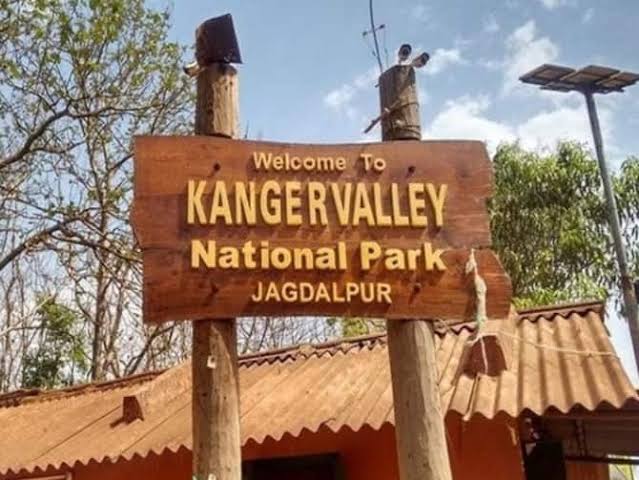
Kanger Valley National Park is one of the most distinctive protected landscapes in central India because it brings together dense forest, river-fed valley terrain, caves, waterfalls, wildlife habitat, and a strong sense of remoteness within a relatively compact area. Located in the Bastar region of Chhattisgarh, the park spreads across about 200 square kilometers and takes its name from the Kanger River, whose presence helps shape the park’s ecological rhythm. It was declared a national park in 1982, and today it is widely recognized for its biological diversity as well as its remarkable limestone cave systems.
This is not a forest that should be understood only through sightseeing stops. Kanger Valley is best read as a living ecological corridor of moist valley forest, rocky uplands, shaded streams, gorges, cave entrances, and riparian habitat. Its beauty is not only visual. It is also atmospheric. There is a change in sound as one moves deeper into the park. Bird calls become more precise, the canopy light becomes softer, and the terrain begins to explain why wildlife, reptiles, cave organisms, and moisture-loving plants survive here in such unusual combination. That is what makes Kanger Valley important for a traveler who wants more than a checklist visit.
Kanger Valley in one line: it is a compact but deeply layered national park where old-growth moist forest, river-linked habitat, cave geology, waterfalls, rare birds, mammals, reptiles, butterflies, and tribal landscape all meet in one protected setting.
History and Overview
Kanger Valley National Park was notified in 1982 to protect a landscape that was already known for its natural caves, rich forest cover, and wildlife diversity. Over time, its significance has grown beyond conventional protected-area value because the park is now recognized as an important site of both biodiversity and geodiversity. The park lies in Bastar district near Jagdalpur and is associated with the transitional setting between the Deccan Peninsula and the eastern hill systems, which helps explain the park’s habitat complexity.
Its conservation importance became even more visible when UNESCO’s World Heritage Centre placed Kanger Valley National Park on India’s Tentative List. The park was highlighted there for its outstanding karst landforms, subterranean limestone caverns, dense valley forest, rare and endemic life, and strong ecological as well as geological value. That recognition is meaningful because it confirms that Kanger Valley is not simply a regional tourist destination. It is a nationally important landscape where natural history works above and below the ground at the same time.
The scale of the park may look moderate on paper, yet its ecological density is high. Official descriptions note exceptional scenic beauty, deep gorges, lush valley forest, waterfall zones, and cave systems that support unique biological communities. A traveler may enter expecting forest and leave remembering caves, or arrive for caves and leave most impressed by birdlife, mossy rock, or the sensation of humidity and silence in the valley. That layered quality is central to the identity of Kanger Valley National Park.
Landscape, Terrain, and Ecosystem Character
Kanger Valley is shaped by undulating ground, steep-sided sections, moist forest depressions, river channels, rocky outcrops, and subterranean limestone development. The official UNESCO description highlights the park’s steep green valley views, gorge systems, dense moist peninsular sal forest, and subterranean caves that together create one of the most unusual protected landscapes in the Indian subcontinent. It is also described as one of the densest national parks in India in terms of forest character.
Ecologically, the park is especially interesting because it forms a transition zone between sal and teak forest systems in peninsular India. In a small geographic area, Kanger Valley supports tropical moist deciduous, tropical dry deciduous, and tropical semi-evergreen forest types. This means the park is not visually uniform. Some parts feel broad and sunlit, while others are enclosed, damp, and almost cave-like even before one reaches the actual limestone chambers. Such transition in terrain and vegetation has a direct impact on bird movement, ungulate feeding, predator routes, and reptile presence near damp rocky edges.
Hydrology is equally important. The Kanger River and its associated water systems help nourish the valley. Waterfall zones, seasonal flows, moist ravines, and sheltered rocky surfaces create the kind of microhabitats that support mosses, ferns, butterflies, amphibians, and cave-linked ecological processes. Around Tirathgarh, the interplay of river, fall, spray, sandstone, and vegetation gives the landscape a strong sensory identity. It is cooler, louder, greener, and more dynamic than the dry forest image many travelers carry of central India.
Flora
The vegetation of Kanger Valley National Park is far richer than a simple reference to teak, sal, and bamboo suggests. Official forest department records note 553 floral species, with 12 species reported new to Chhattisgarh and 43 described as rare. UNESCO material presents an even wider documented botanical richness in the park, including large numbers of angiosperms, pteridophytes, orchids, grasses, climbers, ferns, and bamboo, showing that the park serves as a significant botanical refuge within the Bastar region.
For a visitor, the most immediately visible plant character comes from the moist deciduous forest structure. Sal gives many sections of the valley a tall, shaded, somewhat cathedral-like feel, while teak and bamboo create different textures depending on slope, moisture, and light exposure. The undergrowth can vary from open leaf-littered forest floor to denser seasonal growth. During wetter periods and in moist folds of the terrain, the forest gains a softer appearance through ferny surfaces, moss-covered rock, and climbers that make the woodland feel older and more sheltered.{index=10}
The park’s floral richness also supports its animal life in practical ways. Fruit-bearing trees support birds and arboreal movement. Dense cover gives security to deer and wild boar. Bamboo and thickets offer concealment to smaller mammals and nesting opportunity for birds. Moist riparian sections and rocky shaded patches help sustain amphibians, invertebrates, and reptiles. In this sense, the flora of Kanger Valley is not merely background scenery. It is the structure on which the park’s entire wildlife system depends.
Fauna
Kanger Valley National Park supports a notably wide faunal range. Official forest records list 49 mammal species, 144 bird species, 16 amphibian species, 37 reptile species, 56 fish species, 91 butterfly species, 26 moth species, and 113 spider species. UNESCO’s later description also emphasizes the park’s diversity, including mammals, birds, amphibians, reptiles, and butterflies, along with endemic and cave-associated life. This is why the park appeals not only to general tourists but also to naturalists, birders, herpetology enthusiasts, and researchers.
Mammals
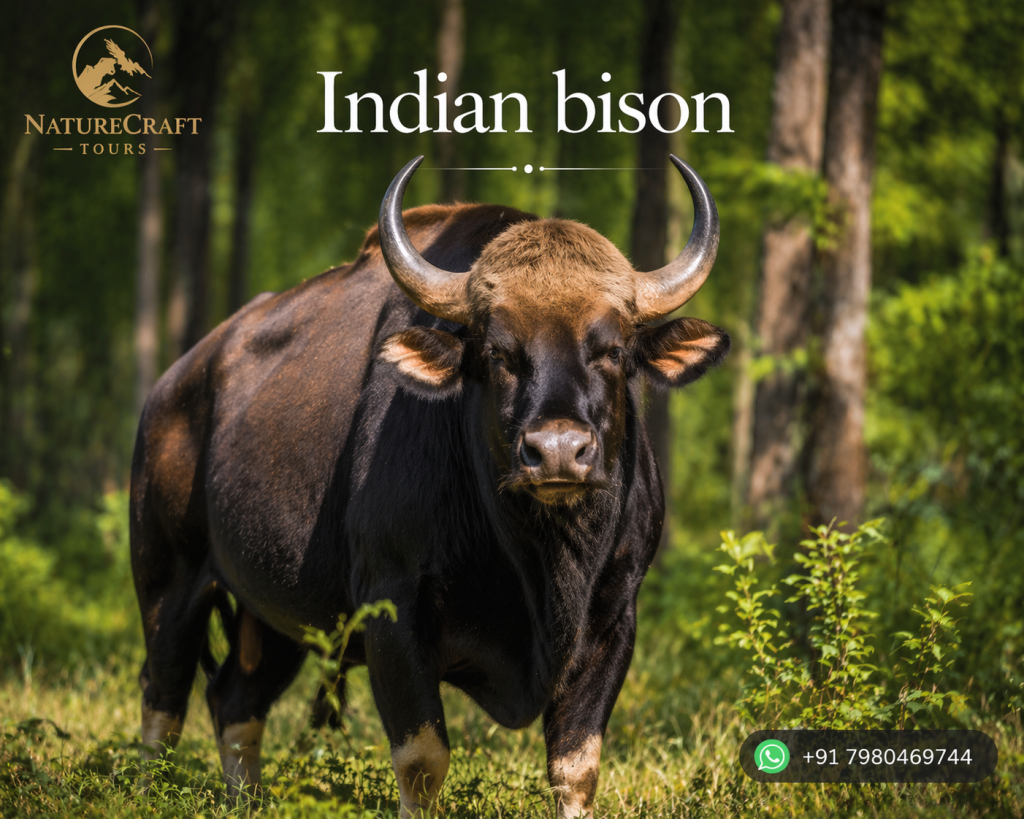
Among the better-known mammals of the park are leopard, sloth bear, wild boar, gaur or Indian bison, barking deer, chital, jackal, wild dog, civet, otter, giant squirrel, langur, and rhesus macaque. Some sources also highlight rare fauna such as binturong. What is important from an observation perspective is that this is a forest where large mammals are often sensed before they are seen. Broken leaf-litter sound, alarm calls, fresh tracks, dung, or recently disturbed vegetation may tell more than direct sightings. Leopards and sloth bears especially depend on caution and cover, and that changes how one should experience the park. A quiet eye is usually more useful here than constant movement.



Birds
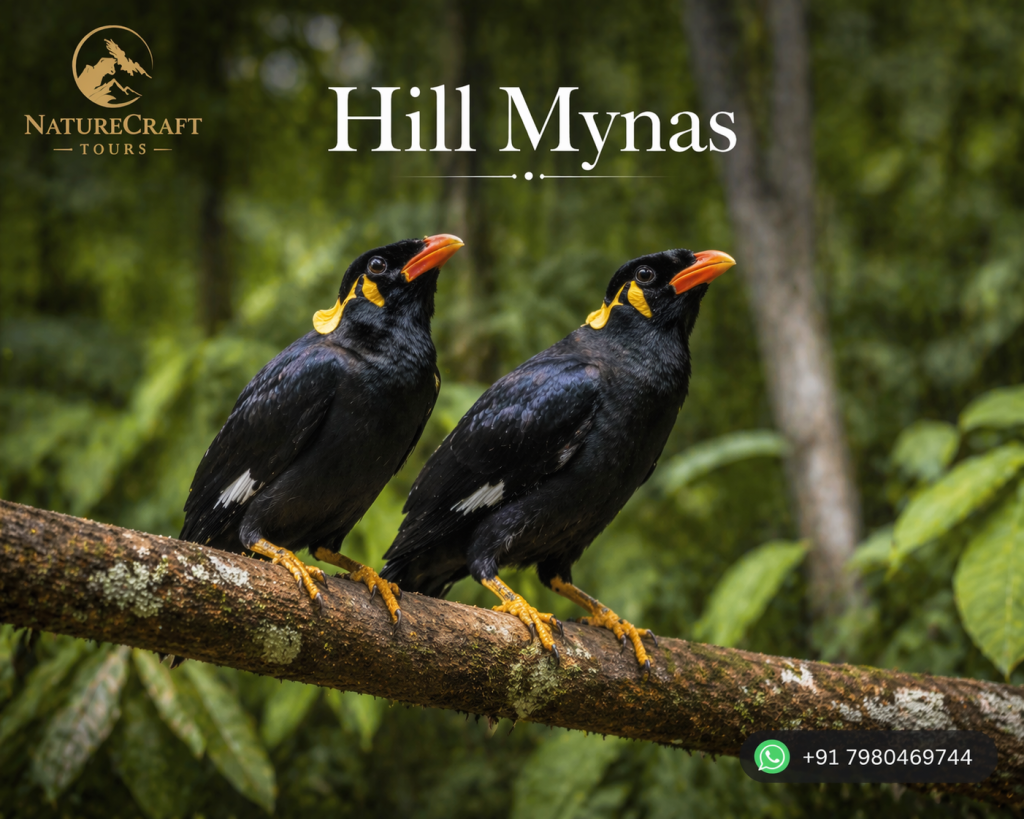
Birdlife is one of the strongest reasons to spend slow, observant time in Kanger Valley. Official records mention resident and migratory birds, with winter drawing some species to surrounding agricultural landscapes after harvest. Avifauna noted in official material includes Bastar Hill Myna, peafowl, red junglefowl, parrots, spotted owl, steppe eagle, red spurfowl, partridge, and more. UNESCO material also emphasizes the Bastar Hill Myna and other noteworthy birds. For many visitors, the Bastar Hill Myna is the emotional symbol of the park because it is also the state bird of Chhattisgarh and is known for its vocal versatility.


Reptiles, Amphibians, and Invertebrates
The reptile and smaller-life diversity of Kanger Valley adds depth to the park’s ecological story. Official records mention snakes, tortoise or turtles, crocodiles, and a broad reptile base. UNESCO material notes 37 reptile species and also draws attention to the park’s amphibian diversity. The limestone-and-water relationship of the park, together with moist forest conditions, helps sustain invertebrate life as well. Butterflies, moths, spiders, and cave fauna are not minor details here. They are a key reason the park attracts ecological interest. Some underground cave organisms are described as unique to the park’s limestone systems, which makes Kanger Valley important not only above ground but below it.


Wildlife Experience and Field Observation Value
Wildlife watching in Kanger Valley is often a lesson in patience rather than a guarantee of dramatic sightings. This is an alert forest. Animals here use cover well. Leaf litter, shade, stream margins, and bamboo thickets all assist concealment. What visitors may realistically see depends on timing, noise level, guide skill, weather, and how much time is spent quietly in one habitat instead of rushing between stops. Early morning and late afternoon are generally the best periods for activity, especially for birds and for signs of mammal presence.
One of the park’s strengths is interpretive value. Even when large mammals are not visible, the forest still reveals patterns. Scratch marks, hoof marks near wet soil, droppings, call changes, monkey alarm reactions, sudden silence, or the movement of peafowl across a clearing can all suggest what has recently passed through the area. Kanger Valley rewards attentive visitors because the park is rich in ecological clues. It is an excellent place to learn how a forest communicates without always revealing its animals directly.
Birdwatching Significance
Birdwatchers value Kanger Valley because the park combines interior forest habitat, edge habitat, moist valley conditions, and nearby agricultural interfaces. That mixture supports both resident woodland birds and seasonal visitors. Official information confirms the presence of both migratory and resident birds, with winter being especially useful around harvested fields and open edges. In forest sections, quieter birding conditions often come shortly after sunrise when vocal activity helps with identification even before visual contact is made.
The Bastar Hill Myna is the headline species, but peafowl, hornbills, junglefowl, partridge-type birds, owls, parrots, and raptors contribute to the park’s broader ornithological appeal. For serious birders, Kanger Valley is not only about checking species off a list. It is about reading vertical forest space: canopy movement, mid-level calls, fruiting-tree activity, and the contrast between open trails and dense shaded patches. Good birding here depends on moving slowly and allowing the forest to settle around you.
Main Attractions
Kotumsar Cave
Kotumsar Cave is the park’s best-known geological attraction and remains one of the strongest reasons travelers come to Kanger Valley. It is associated with limestone formations, intricate interior passages, and cave ecology. The site is also noted for blind cave fish and scientific interest. This is not a place for casual wandering. Guided access matters because caves are fragile, disorienting, and ecologically sensitive. The value of Kotumsar lies not just in its shapes but in the realization that the national park extends underground into a different kind of natural world.
Dandak and Kailash Caves
Dandak Cave and Kailash Cave deepen the geological identity of the park. These caves are important for visitors who want to understand that Kanger Valley is a karst landscape rather than only a forest reserve. Stalactites, stalagmites, flow formations, and damp cave surfaces all point to long geological processes linked to water, limestone, and time. For nature travelers, these caves add contrast to the journey. After open forest and river sound, the cave environment feels controlled, echoing, mineral, and ancient.
Tirathgarh Waterfall
Tirathgarh Waterfall is among the visual highlights of Bastar and one of the most memorable landscapes within the Kanger Valley experience. District information describes it as around 35 kilometers from Jagdalpur and among the major waterfalls of the region, while UNESCO material describes the waterfall descending about 150 feet over sandstone rock before joining the Kanger River system. It is best appreciated not merely as a scenic stop but as a hydrological and ecological zone where spray, rock, moss, fern growth, and butterfly activity come together.
Kanger Dhara, forest stretches, and wildlife corridors
The quieter appeal of the park lies in places such as river sections, forest tracks, and intermediate scenic zones rather than only headline attractions. Kanger Dhara and similar valley sections offer the slower part of the experience: shade, water, stillness, and the chance to notice habitat instead of monument-like scenery. These are the parts of the park where birding, listening, and observation become more rewarding than photography alone. Travelers who allow time for such pauses usually come away with a deeper impression of Kanger Valley than those who visit only the caves and waterfall.
Tribal, Cultural, or Human Landscape Context
Kanger Valley lies in Bastar, a region known for strong indigenous cultural identity. UNESCO material notes that tribal communities continue to have a relationship with the landscape and that some caves hold cultural significance, especially during Mahashivratri. The same source also notes that only a very small portion of the park area is used by local tribal residents for agriculture and that there are only limited settlements within the park boundary. This reminds visitors that protected landscapes in India are rarely empty spaces; they are often layered with ecological and cultural histories at once.
A respectful visitor should therefore treat Kanger Valley not as an isolated wilderness theme park, but as part of a broader Bastar landscape where forest, ritual memory, local knowledge, and conservation meet. Museums, markets, and cultural sites in Jagdalpur help provide that context. Understanding Bastar’s human geography can make a visit to the national park more grounded and more responsible.
Best Time to Visit
The most practical visiting window for Kanger Valley National Park is from October to June, with winter and the cooler part of the dry season generally being the most comfortable for most travelers. Monsoon months usually bring access limitations and official seasonal closure for key visitor activity because rainfall affects safety, cave conditions, road usability, and river-linked movement. This means trip planning must take season seriously rather than treating the park as equally accessible throughout the year.
- October to February: Best for mild weather, comfortable walking, birding, cave visits, and balanced forest experience.
- March to June: Good for clearer visibility in some forest stretches and active safari slots, but afternoons can become warm.
- July to September: Atmosphere is lush and dramatic, especially around waterfalls, but access is usually restricted or closed for safety.
Winter visitors often enjoy the park most because forest movement is pleasant, photography conditions are good, and the cool air makes longer outdoor time easier. Summer visitors may benefit from stronger chances of spotting wildlife signs near water and from clearer forest views in some areas, but they should be prepared for heat. Monsoon transforms the landscape visually, especially around waterfall zones, yet it is also the least reliable season for a standard visitor itinerary.
Timings, Entry Rules, Permits, and Visitor Regulations
Timings vary slightly by type of activity and season, so visitors should not assume one fixed park schedule for every experience. Official tariff and safari information indicates entry-linked timings around the Jagdalpur and Kotamsar barriers, along with separate safari time bands that change seasonally. This is important because a late arrival can reduce the quality of the visit even if entry is still technically open.
- Tourist information center timing: around 7:30 AM to 2:30 PM.
- Jagdalpur and Kotamsar barrier timing: around 8:00 AM to 3:00 PM.
- Safari timing from 1 November to 15 February: 6:00 AM to 11:00 AM and 2:00 PM to 6:00 PM.
- Safari timing from 16 February to 15 June: 6:00 AM to 11:00 AM and 3:00 PM to 6:30 PM.
- Monsoon: visitor access is commonly restricted or closed for safety.
Important: cave exploration is guide-dependent, and that rule is practical, not merely administrative. Caves are ecologically fragile and physically disorienting. Visitor regulations in such landscapes protect both people and formations. Reptile zones, wet rock, steep steps, and seasonal flow conditions also make it important to follow official instructions at all times.
Ticket Fees and Booking Process
The fee structure available in official sources shows that rates can differ from older published travel articles, which is why visitors should confirm charges shortly before travel. The official tariff page lists per-person fees for Indian and foreign tourists, vehicle charges, digital and video camera fees, and a mandatory guide fee. Separate safari booking information also confirms a compulsory guide charge and lists cancellation terms for vehicle and guide charges on advance bookings. :contentReference[oaicite:27]{index=27}
- Indian tourist: ₹25 per person (official tariff page).
- Foreign tourist: ₹150 per person (official tariff page).
- Four-wheel vehicle: ₹50.
- Motor vehicle: ₹10.
- Digital camera: ₹25.
- Video camera: ₹200.
- Guide: ₹300 per 8 persons, compulsory for relevant visits.
Booking is usually done either on site or through the official safari booking system when advance planning is needed. Travelers should carry valid ID, keep enough time for entry formalities, and avoid reaching too late in the day. Group travelers, families with elders, and those planning cave access should especially consider advance coordination so that vehicle, guide, and visit timing are aligned properly. Cancellation deductions for advance vehicle and guide charges increase sharply as the date approaches, so last-minute changes can be costly.
- Carry a government photo ID.
- Confirm whether you need standard entry only or safari-linked booking.
- Book a guide in advance if cave visit is central to your trip.
- Reach early enough to avoid losing the best forest hours.
How to Reach
By Air
The nearest major airport for most travelers remains Raipur. From there, the journey continues by rail or road toward Jagdalpur and then onward to the park. For travelers coming from outside Chhattisgarh, this usually means planning Kanger Valley as a connected route rather than a quick same-day airport excursion.
By Rail
Jagdalpur is the nearest practical rail base for park visitors. From Jagdalpur, the park is reachable by taxi or local road transport. Since the final segment is what determines comfort, it is wise to arrange the onward transfer in advance, especially during holiday periods or when traveling with luggage, children, or elders.
By Road
District information places Kanger Valley National Park at roughly 34 kilometers from Jagdalpur, while Tirathgarh is around 35 kilometers from Jagdalpur. The park is therefore highly workable as a day excursion from Jagdalpur, though those interested in birding, photography, or slower exploration may prefer a more flexible plan with early departure. Road access is generally the most practical final approach.
- Use Jagdalpur as the main base for transport, food, and accommodation.
- Start early if you want both cave and forest experience in one day.
- In rainy periods, always recheck road and access status before departure.
Accommodation and Stay Planning
Most travelers stay in or around Jagdalpur rather than inside the deeper forest landscape. That is usually the most practical choice because Jagdalpur offers better access to meals, transport, supplies, and onward sightseeing in Bastar. Travelers should not expect the kind of extensive luxury wildlife-lodge network found in some tiger reserves. Kanger Valley is better approached as a nature-focused regional circuit where comfort levels depend heavily on the town base you choose and how much remoteness you are willing to accept.
- Jagdalpur stays: most practical for families, general tourists, and multi-spot Bastar itineraries.
- Simple eco-oriented stays: suitable for travelers prioritizing early forest access over urban convenience.
- Advance planning: useful during holidays and winter travel months.
- Food and electricity: easier to manage from town-based accommodation than from remote, limited setups.
What Travelers Should Know Before Going
Kanger Valley rewards prepared travelers. It is not difficult in an extreme sense, but it does require realistic planning. The mix of caves, forest terrain, steps, moisture, wildlife rules, and distance from bigger urban centers means comfort depends less on luxury and more on readiness.
- ID proof: keep valid photo identification ready for entry formalities.
- Footwear: wear sturdy shoes with grip; wet rock and steps can be slippery near caves and falls.
- Clothing: choose breathable but modest clothing suitable for forest walking and cave visits.
- Insect protection: carry repellent, especially in humid months and near water.
- Hydration: carry drinking water, especially in warmer months.
- Cash buffer: remote travel in Bastar is smoother when you do not depend fully on digital payment everywhere.
- Phone network: do not expect perfect connectivity in all forest sections.
- Medical basics: keep personal medicines, band-aids, ORS, and a simple first-aid kit.
- Photography discipline: avoid flash in sensitive cave or wildlife settings if instructed not to use it.
- Guide dependence: do not treat guides as optional in cave areas or regulation-heavy zones.
- Family suitability: good for interested families, but very young children may find caves or long walking sections tiring.
- Senior travelers: possible with careful pacing, but steep steps and uneven surfaces should be considered in advance.
- Solo travelers: quite manageable from Jagdalpur with organized transport, early timing, and advance clarity on access.
Interesting Facts
By the time a traveler has moved through the forest, caves, birdlife zones, and river-linked habitats of Kanger Valley, one fact becomes clear: the park’s wildlife story extends well beyond a few famous species. The animals associated with the park connect it to a much wider network of Indian protected landscapes. The table below highlights major species connected with this article and other Indian national parks where they are also found. {index=30}
| Wildlife Species | National Parks in India |
|---|---|
| Leopard | Kanger Valley, Jim Corbett, Bandipur, Nagarhole, Satpura, Ranthambore |
| Sloth Bear | Kanger Valley, Satpura, Bandhavgarh, Kanha, Nagarhole, Tadoba |
| Wild Boar | Kanger Valley, Kaziranga, Jim Corbett, Kanha, Bandipur, Sundarban |
| Indian Bison / Gaur | Kanger Valley, Kanha, Bandipur, Nagarhole, Periyar, Mudumalai |
| Barking Deer | Kanger Valley, Corbett, Namdapha, Manas, Periyar, Nagarhole |
| Chital | Kanger Valley, Kanha, Bandhavgarh, Ranthambore, Bandipur, Nagarhole |
| Wild Dog / Dhole | Kanger Valley, Nagarhole, Bandipur, Periyar, Kanha, Mudumalai |
| Bastar Hill Myna | Kanger Valley, Indravati, Udanti-Sitanadi landscape, parts of Bastar forest region |
| Peafowl / Peacock | Kanger Valley, Ranthambore, Gir, Bandipur, Keoladeo, Satpura |
| Hornbill | Kanger Valley, Namdapha, Pakke landscape, Manas, Great Himalayan foothill forests, Silent Valley |
| Crocodile | Kanger Valley, Bhitarkanika, Sundarban, National Chambal Sanctuary landscape, Simlipal river sections |
| Turtles / Tortoises | Kanger Valley, Sundarban, Bhitarkanika, Keoladeo, Kaziranga wetland zones |
| Butterflies | Kanger Valley, Namdapha, Silent Valley, Great Himalayan National Park, Periyar, Singalila |
The table also shows why Kanger Valley deserves broader attention. Some of its animals are shared with famous Indian parks, but the combination of cave geology, moist valley forest, and Bastar landscape makes the setting in which these species occur very different here. That combination is part of what gives the park its research value and its distinct visitor experience.
Important Facts
Kanger Valley National Park is important not just because it is scenic, but because it is ecologically and geologically unusual in one place. It contains dense valley forest, a transition between sal and teak systems, limestone caves with subterranean life, waterfall-linked moisture zones, significant botanical diversity, and a faunal profile that includes rare and regionally important species. The presence of endemic cave organisms and the recognition of the park on UNESCO’s Tentative List further raise its importance as a conservation landscape.
- The park is a nationally significant karst and cave landscape.
- It supports old-growth moist valley forest in the Bastar region.
- It is associated with the Bastar Hill Myna, the state bird of Chhattisgarh.
- Its plant diversity is unusually rich for a park of its size.
- Its value lies in both biodiversity and geodiversity, which is not common in every protected area.
Sundarban Connection and Ecological Comparison
At first glance, Kanger Valley National Park and Sundarban National Park appear to belong to completely different worlds. Kanger Valley is an inland forested valley of Bastar with limestone caves, moist deciduous woodland, and waterfall-linked terrain, while the Sundarban is a tidal mangrove delta shaped by mudbanks, creeks, saline influence, and shifting estuarine edges. Yet a thoughtful comparison reveals meaningful ecological similarities. Both landscapes teach visitors that wildlife is often experienced through caution, silence, and habitat reading rather than through easy sightings. In both places, animals are highly alert, prey species move with nervous awareness, and the forest or wetland must be understood as a system of concealment. Those who approach either park expecting guaranteed dramatic sightings often miss the more subtle rhythm that defines real field experience.
The Sundarban experience, especially for travelers following a serious Sundarban travel guide, is shaped by channels, tidal timing, mud, mangrove roots, bird calls over open water, and the constant possibility that a predator may be present without being visible. Kanger Valley creates a similar psychological effect in a very different setting. Here the concealment comes from forest density, ravines, cave-shadowed terrain, and heavy vegetation instead of mangrove creek geometry. In both parks, sound becomes important. Alarm calls, silence, sudden movement at the edge of vision, and habitat clues often matter more than direct animal visibility.
There is also a meaningful comparison in birdlife and wet-linked habitat. The Sundarban is famous for its estuarine birding, raptors, kingfishers, herons, and mudflat-associated life, while Kanger Valley is valued for forest birds, the Bastar Hill Myna, peafowl, hornbills, and a mix of resident and seasonal avifauna. The difference lies in habitat form, but the shared lesson is that water-related ecological productivity supports bird richness in both regions. In the Sundarban that productivity comes through tides, sediment, creeks, and mangrove nursery systems. In Kanger Valley it comes through river corridors, moist valleys, waterfall influence, and forested microhabitats that support layered life from insects to birds to mammals.
Predator-prey relationships also create a quiet conceptual bridge between the two parks. The Sundarban is globally known for tiger presence and for the extreme caution shown by animals moving through exposed tidal habitat. Kanger Valley, though very different in species emphasis and landscape structure, also carries this sense of careful movement. Leopards, sloth bears, deer, wild boar, and smaller mammals all respond to cover, moisture, and forest sound. In both parks, the traveler learns not to force the landscape. Watching patiently, accepting uncertainty, and respecting fragile habitat are essential. That is why people who enjoy a responsible Sundarban tour package often also appreciate Kanger Valley, even though the two ecosystems are visually unlike each other.
There is one more useful comparison. The Sundarban teaches visitors that landscape itself is the main event: tides, mangroves, channels, mudbanks, and silence become as important as any single animal. Kanger Valley teaches the same lesson through forest depth, caves, falls, rock, and moist valley light. In both parks, the most rewarding journey is one that treats the habitat as alive and sensitive. A well-planned Sundarban travel experience reveals this through river movement and mangrove fragility. Kanger Valley reveals it through cave darkness, dense deciduous forest, and the ecological feeling of being inside a protected landscape that still retains mystery.
Nearby Attractions
Kanger Valley is best understood as part of a wider Bastar journey rather than as a completely isolated stop. Several nearby places strengthen the trip by adding cultural, scenic, and historical context.
- Chitrakote Waterfall: one of the most famous waterfall experiences in Chhattisgarh, useful for travelers who want to combine forest, river, and large-scale scenic drama in the same trip.
- Anthropological Museum, Jagdalpur: valuable for understanding Bastar’s tribal cultures, tools, textiles, and regional identity before or after the park visit.
- Bastar Palace: adds historical context to the region and helps travelers connect landscape with political and cultural memory.
- Dholkal Ganesh Temple: suitable for travelers interested in combining natural terrain with a more demanding cultural trek experience.
Tips for Visitors
- Start early and do not waste the best forest hours.
- Keep expectations realistic; the park is rewarding even when large animals are not seen.
- Use guides properly, especially in cave sections.
- Move quietly and avoid playing music or speaking loudly in wildlife zones.
- Carry back all plastic and avoid litter of any kind.
- Wear proper shoes instead of open sandals near wet rock and steps.
- Build buffer time into your road plan from Jagdalpur.
- If photography matters to you, allow time for still observation instead of rushing between spots.
Conclusion
Kanger Valley National Park is one of those protected areas that becomes more impressive the more carefully it is experienced. Its importance lies not in one single feature, but in the way cave geology, moist forest, birdlife, waterfall energy, reptile presence, and Bastar landscape all come together in one compact but deeply layered national park. It is a destination for travelers who value observation, ecological texture, and the feeling of entering a forest that still retains depth and restraint. For anyone interested in a serious nature journey in Chhattisgarh, Kanger Valley remains one of the most rewarding landscapes to understand slowly. :contentReference[oaicite:33]{index=33}