Updated: 17 April 2026
Rajiv Gandhi National Park (Rameswaram): A Comprehensive Guide
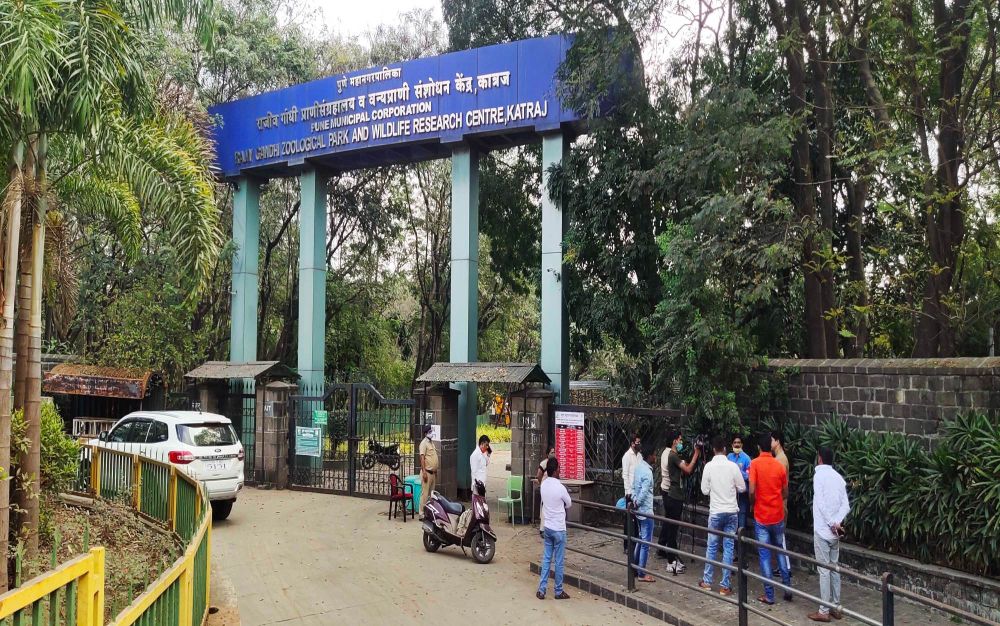
Rajiv Gandhi National Park, officially known as Rajiv Gandhi (Rameswaram) National Park, is one of those rare protected landscapes whose importance becomes clearer the longer one studies it. It does not depend on dramatic mountain profiles, famous safari circuits, or the promise of repeated large-mammal sightings. Instead, its identity grows out of smaller, quieter ecological relationships: sandy ground holding heat, dry deciduous cover responding to season, low scrub offering concealment, and the nearby Penna River shaping moisture, movement, and habitat texture. It is a national park that asks for careful observation rather than hurried consumption.
The park is also widely misunderstood because of the “Rameswaram” wording attached to its name. Many readers assume a direct relationship with the coastal and pilgrimage landscape of Tamil Nadu. In reality, this protected area lies in Andhra Pradesh, in the Kadapa region, on the north bank of the Penna River. That distinction matters because it changes everything about how the park should be imagined. This is not a marine reserve, an island ecosystem, or a tidal forest. It is a compact inland national park where dry woodland, scrub, sandy soils, and river-linked ecological patterns create a distinctive conservation landscape.
For travelers interested in lesser-known protected areas, for birdwatchers who appreciate open-country observation, and for readers who want to understand how conservation works beyond the biggest and most celebrated reserves, Rajiv Gandhi National Park offers unusual value. It demonstrates that ecological significance is not always a matter of scale. Even a small protected patch can hold habitat continuity, preserve native vegetation structure, support reptiles and ground birds, and act as a living reminder of what a region’s natural character once looked like before fragmentation intensified.
This park is important not because it is vast, but because it protects a small and vulnerable dry-forest ecosystem in a human-influenced landscape where ecological loss can happen quietly and quickly.
Introduction
The first impression of Rajiv Gandhi National Park is often one of openness. Light reaches the ground without much difficulty. The visitor does not feel enclosed in deep forest shadow. Instead, the eye moves across dry patches, sparse tree cover, shrub growth, and sandy stretches that appear simple at first glance. Yet that simplicity is deceptive. The landscape reveals itself slowly. A bird may remain visible on a repeated perch for several minutes, while a hare may disappear into plain sight simply by freezing against the soil. A mongoose can pass through the same ground that looked empty only seconds earlier.
What makes the park distinctive is this combination of visibility and concealment. In dense forest, hidden life is expected. Here, the surprise is that life can remain hidden even in open country. This gives the park strong interpretive value. It teaches visitors that biodiversity is often expressed through adaptation, not spectacle. The rhythm of survival in such a place depends on reading wind, heat, cover, distance from water, and the shifting usefulness of shade. Every living form in the park, from shrubs to skinks, reflects a practical response to these conditions.
For this reason, the park is especially rewarding for attentive travelers. It suits those who enjoy natural history, ecological pattern, and field interpretation. It is less about collecting dramatic moments and more about learning how a protected landscape functions. Even a short visit can become meaningful if one arrives ready to notice tracks in sand, the position of birds at sunrise, the role of thorny scrub as refuge, and the way the river’s presence quietly influences the entire system.
History and Overview
Rajiv Gandhi (Rameswaram) National Park was first notified as Rameshvaram National Park in November 2005 and was renamed Rajiv Gandhi National Park in December 2005. Though small in area, it was granted formal national park status under India’s protected-area framework, which gave it the highest category of legal recognition available to a wildlife habitat within that system. That classification matters because it provides the basis for regulation, ecological protection, and administrative oversight in a region where land-use change can otherwise reduce habitat continuity very quickly.
Its area, approximately 2.3952 square kilometres, places it among the smaller national parks in India. Yet conservation value is not always proportional to size. In fragmented landscapes, small protected tracts can serve as secure biological pockets. They can preserve representative vegetation, protect local wildlife movement, and maintain ecological memory in districts where much surrounding land has already been altered for farming, settlement, or infrastructure. In this sense, Rajiv Gandhi National Park is valuable not only for what it contains, but also for what it represents: the formal recognition that dry inland habitats near rivers deserve protection even when they do not fit mass-tourism expectations.
The later process of eco-sensitive zone notification around the park further reflected administrative awareness that boundary management matters. In such a compact reserve, activities outside the core habitat can influence the inside very quickly. Noise, extraction, uncontrolled access, littering, edge disturbance, or aggressive development can reshape a small ecosystem much faster than in a very large forest. That is why the park’s official status has wider significance. It is not only a protected patch on paper. It is a managed ecological space whose survival depends on legal restraint, field monitoring, and responsible public behavior.
Officially associated facts include its establishment in 2005, an area of about 2.3952 sq km, location in Andhra Pradesh near Kadapa district, and its position on the north bank of the Penna River.
Landscape, Terrain, and Ecosystem Character
The landscape of Rajiv Gandhi National Park is shaped by low relief, sandy substrate, dry deciduous texture, and river-edge influence. Because there are no major altitudinal changes, ecological variation does not come from steep elevation zones. Instead, it comes from subtle but meaningful differences in shade, exposure, soil moisture, vegetation density, and proximity to the Penna River. This creates a landscape that is understated but highly readable. One patch may feel hotter and more exposed, while another, only a short distance away, offers cooler shade, denser scrub, and more bird activity.
Dry deciduous systems like this operate through seasonal pulses. During the drier months, leaf fall reduces canopy cover, making the ground more visible and the light more severe. Animal movement can concentrate around favorable cover or whatever moisture remains. As temperatures rise, open soil stores heat, and midday activity becomes lower for many species. After rain, the same land changes character. Herb growth rises quickly, insect life increases, temporary moisture attracts amphibians, and birds may become more active around newly productive edges. The result is a park whose apparent simplicity transforms noticeably across the year.
The Penna River adds another level of ecological importance. Even where the visitor does not see water dominating the experience, the river remains part of the park’s logic. River-adjacent habitats often produce edge effects that influence vegetation composition, microclimate, and wildlife use of space. Flood dynamics, sediment deposition, and seasonal retention of moisture all affect which plants survive and how animals move. In many such landscapes, the most interesting ecological boundaries are not hard borders but gradual transitions between drier interior ground and slightly more moisture-influenced edge conditions.
How the Terrain Shapes Wildlife
In open dry habitats, concealment often depends on stillness, color matching, and the intelligent use of broken cover. Unlike dense forest, where deeper shadow can hide large movement, here wildlife survives by reading the landscape precisely. A black-naped hare can vanish by lowering itself against dry grass. A skink may appear identical to the soil until sunlight catches the body at an angle. Ground birds can remain invisible simply by staying motionless. This means the visitor must learn to detect disruption in pattern rather than expecting obvious form.
This is one of the park’s strongest educational values. It demonstrates that an apparently open landscape can still be full of hidden life. It also teaches that habitat structure, however modest it looks, has direct survival consequences. A patch of thorn scrub, a shallow depression holding slightly better moisture, or a narrow strip of shade can matter enormously in dry terrain.
Flora



The park’s vegetation is best understood as a dry deciduous and scrub-influenced mosaic adapted to heat, irregular moisture, and sandy soils. Species associated with the area include Dalbergia sissoo, Grewia villosa, and Gymnema sylvestre. These already suggest a landscape that is not lush in the evergreen sense, but ecologically efficient and season-sensitive. It is a plant community built around endurance rather than visual abundance.
Vegetation here can be read in layers. The upper tree layer is relatively broken and selective, unlike the denser cover of moist forests. This allows light to reach the ground, which in turn influences the distribution of grasses, herbs, and low shrubs. The middle layer is particularly important. Shrubs provide nesting points for birds, thermal shelter for reptiles, and hiding structure for small mammals. In many dry systems, this middle layer does much of the ecological work that a denser canopy would do elsewhere.
The ground layer changes strongly with season. In the dry months it can appear dusty, sparse, and subdued, with more visible soil and leaf litter. After rainfall, even modest moisture can trigger surprisingly quick biological activity. Fresh herb growth appears, grasses rise, insects increase, and feeding opportunities improve for birds and smaller vertebrates. Such changes are important because they show how dynamic a dry landscape really is. What looks quiet in one season may become acoustically and visually active in another.
Trees such as neem and tamarind, often linked with resilient dryland environments, contribute more than shade. They offer perch sites, roosting opportunities, insect support, and a degree of microclimatic moderation in exposed surroundings. Thorny shrubs and dense scrub perform another critical role. They create protected structure. In a landscape where visibility can mean vulnerability, these plants are not secondary elements. They are survival architecture.
The deeper value of the park’s flora lies in what it teaches about adaptation. Root systems help hold loose soil. Seasonal leaf behavior can reduce water demand. Open structure permits the persistence of light-demanding species. Wind exposure, soil temperature, and rainfall irregularity are all answered through plant form and distribution. To a visitor willing to look closely, the vegetation of Rajiv Gandhi National Park becomes a practical lesson in how ecosystems solve environmental pressure.
Fauna






The park’s fauna is defined less by charismatic large predators and more by the integrity of a compact dryland community. Available descriptions mention mammals such as spotted deer, common mongoose, and black-naped hare; reptiles including Russell’s earth boa, Russell’s viper, common skink, monitor lizard, and Indian star tortoise; amphibians such as bullfrog and common Indian toad; and a bird list that includes peafowl, little egrets, parakeets, pelicans, and flamingos, with more than fifty bird species reported from the landscape or associated habitats.
This combination of species tells a clear ecological story. Small and medium mammals use cover, quick decision-making, and early detection of danger. Reptiles benefit from open basking opportunities, warm ground, and patchy shade. Amphibians emerge more clearly during wetter periods, reminding the visitor that even dry landscapes contain hidden moisture-dependent life cycles. Bird communities exploit both open space and structural variety, shifting between ground, shrub, perch, and edge depending on time of day and seasonal condition.
Mammals and Ground-Level Movement
In such a park, mammal sightings are often brief and behavior-based. Spotted deer may use open edges while keeping immediate retreat routes close at hand. The black-naped hare depends heavily on stillness and late movement. The common mongoose moves with purpose, reading the ground for prey, scent, and risk at the same time. These are animals of alert landscapes. They do not waste movement. Their behavior becomes easier to understand when one notices how exposed the ground can be and how valuable each strip of cover is.
Reptiles, Amphibians, and Lesser-Known Diversity
Dry protected areas are often especially interesting for reptile observation. Ground warmth, sun exposure, and the presence of both open and sheltered patches create suitable reptile habitat. Skinks may be more common than visitors realize. Snakes, though seldom seen casually, form an important part of the food web. Monitor lizards use their environment with a combination of caution and directness, often appearing where warmth and cover meet. The Indian star tortoise, when associated with dry open habitats, adds another layer of ecological interest to such terrain.
Invertebrates also deserve attention. Grasshoppers, spiders, crickets, beetles, and butterflies play major roles in nutrient cycling, pollination, and prey availability. After rain, amphibian calls and the sudden activity of insects can transform the atmosphere of the park. These changes help explain why even a small reserve can maintain complex ecological processes if disturbance is kept under control.
Wildlife Experience and Field Observation Value
Rajiv Gandhi National Park is particularly suitable for visitors who enjoy field observation rather than spectacle-driven tourism. A meaningful visit here may be made up of small but memorable moments: the call of peafowl over open ground, a reptile warming near scrub edge, a bird dropping repeatedly from a perch to feed, or the sudden revelation of hoof and paw marks in sandy soil. Because the habitat is relatively open, animals often detect human presence early. That means loud movement, careless talking, or a rushed attitude can greatly reduce what a visitor experiences.
The best method is quiet patience. Pause longer than feels necessary. Watch edges rather than centers. Notice where shade begins, where shrubs are thickest, and which patches of soil seem repeatedly disturbed. Listen for alarm notes or sudden silence. In a small park, distance covered matters less than quality of attention. Ten or twenty silent minutes in a promising area can be more revealing than a quick passage through every accessible section.
This is not a park of guaranteed dramatic sightings. It is a dry-forest observation landscape where patience, silence, binocular use, and sensitivity to time of day greatly improve the experience.
Birdwatching Significance
Birdwatching is one of the strongest reasons to value Rajiv Gandhi National Park. Open forest, shrubland, sandy edges, and the influence of river-linked habitat together create useful conditions for bird observation. In denser forests, birding often depends mostly on sound. Here, the birder may benefit from clearer sight lines, more visible perch use, and wider scanning opportunities across open habitat. This does not make birds easier in every case, but it does make behavior easier to interpret.
The reported presence of peafowl, little egrets, parakeets, pelicans, and flamingos suggests a varied bird-use pattern across dry and moisture-linked areas. Some species are more closely tied to open woodland, others to edge habitat, and some to nearby wet or river-influenced zones. Early morning usually offers the best combination of light, movement, and vocal activity. The period shortly after sunrise is especially good for scanning perches, shrub tops, and open feeding ground.
For serious birdwatchers, the real value is not only in building a species list but in watching how birds use the park. How long do they remain exposed? Which perches are used repeatedly? How do they respond to wind, temperature, and changing light? In such a landscape, birdwatching becomes a study of habitat reading. Even common birds become instructive when seen in relation to open ground, thorn scrub, and dry-season pressure.
Main Attractions
Dry Forest and Sandy Habitat Mosaic
The primary attraction of the park is the habitat itself. This is not a destination where one major monument dominates the experience. Instead, the appeal lies in how dry deciduous vegetation, sandy soils, and river-associated ecological influences combine to form a distinctive field environment. Morning light on sandy ground, the broken silhouette of scattered trees, and the quiet discipline of the landscape all contribute to its character.
River-Edge Ecological Reading
Because the park lies near the Penna River, the river context is part of its attraction even when not visually dominant. Visitors interested in ecology will find it useful to think in terms of gradients rather than fixed categories. Slight changes in moisture, vegetation thickness, and bird concentration often reflect the river’s broader influence. This makes the park especially interesting for readers of landscape rather than only casual sightseers.
Quiet Wildlife Viewing
Unlike high-volume safari parks, Rajiv Gandhi National Park has value for quiet watchers. It suits naturalists, students, photographers, and travelers who enjoy subtle wildlife encounters. It is an excellent place to practice field patience, track reading, edge observation, and the careful use of binoculars. The experience is intimate rather than theatrical.
Interpretive Value for Learners
For anyone learning Indian ecosystems, this park is especially useful because it represents a less-publicized protected habitat. It shows how small, dry, inland reserves fit into the broader story of conservation in India. Visitors studying national parks often focus only on tiger reserves, wetlands, or alpine landscapes. Rajiv Gandhi National Park reminds the reader that dry woodland and scrub habitats are equally deserving of attention.
Tribal, Cultural, or Human Landscape Context
Like many protected areas in peninsular India, the park should be understood within a broader human landscape rather than as an isolated island. Local settlements, agriculture, roads, and district-level land use all influence how the protected area survives. In such places, conservation depends not only on formal law, but on coexistence in practice: reduced disturbance, better edge management, restrained use of surrounding land, and some degree of public respect for the protected patch.
This makes visitor behavior especially important. Travelers should approach surrounding communities with restraint and respect. Photography of local people should never be casual or intrusive. If refreshments or small services are purchased in nearby gateway areas, that can support local economies, but the wildlife zone itself should never be treated as a picnic landscape. The most appropriate attitude is observational, quiet, and low-impact.
There is also a broader cultural lesson in the existence of such a park. It reflects a region where natural systems and human use have long existed side by side. Preserving even a small protected area helps maintain not only biodiversity, but also environmental memory. It reminds future generations that local identity is not only shaped by towns and roads, but by the character of native landscapes that once covered much larger areas.
Best Time to Visit
The most comfortable time to visit is generally from October to March. During this cooler period, walking conditions are easier, bird activity is often more rewarding, and the overall experience becomes more balanced for most travelers. The angle of winter light also improves visibility and photography. This season suits first-time visitors, families, older travelers, and anyone who wants a calmer and less physically demanding visit.
Summer, roughly from April to June, can be harsh. Heat intensifies quickly, exposed areas become tiring by late morning, and the overall field experience becomes more demanding. Yet summer also has interpretive advantages. Reduced foliage can improve visibility. Tracks and movement patterns on dry soil become easier to read. Experienced naturalists sometimes prefer such conditions for short, early visits because the landscape becomes more transparent in ecological terms, even if it is less comfortable.
Monsoon and the post-monsoon period change the park’s atmosphere. Fresh growth softens the terrain visually, insects become more active, and amphibian life may increase. The park can feel greener and more biologically revived. At the same time, access conditions may depend on local roads and field circumstances. Thicker growth can also make some observation harder. This season is rewarding for visitors interested in ecological change, but it requires more flexibility.
- October to March: best for comfort, birding, photography, and first-time visits.
- April to June: hotter, better for short dawn visits and track reading.
- Monsoon and post-monsoon: greener, ecologically active, but potentially less predictable for access.
Timings, Entry Rules, Permits, and Visitor Regulations
Indicative visitor information commonly associated with the park mentions operating hours from 6:00 AM to 6:00 PM. As with many smaller protected areas, visitors should still confirm the latest local position before travel. Entry procedures, seasonal restrictions, staffing patterns, or on-ground administrative arrangements may influence actual access. Unlike major tourism-focused reserves, smaller national parks may not always operate through heavily standardized visitor systems.
Rules in such a compact habitat are especially important because disturbance spreads quickly. Loud sound, off-route movement, littering, or careless photography do not affect just one species or one viewing point. They can alter the behavior of multiple animals across a limited space. Responsible conduct therefore becomes part of conservation rather than a mere formality.
- Indicative visiting hours: 6:00 AM to 6:00 PM.
- Carry a valid government photo ID for entry or verification.
- Confirm whether prior permission or local permit formalities apply on your travel date.
- Do not enter restricted habitat patches without approval.
- Do not play music, shout, or try to attract wildlife.
- Keep photography non-intrusive and rule-compliant.
- Avoid feeding wildlife under all circumstances.
- Follow forest staff or guide instructions immediately, where applicable.
In a small reserve, even minor disturbance has amplified impact. Silence, route discipline, and respect for habitat boundaries matter more here than many first-time visitors may realize.
Ticket Fees and Booking Process
The fee structure commonly circulated with this park is usually presented as follows. Because smaller parks may revise local rates from time to time, these should be treated as indicative unless reconfirmed before travel.
- Indian Nationals: ₹30 per person
- Foreign Nationals: ₹200 per person
- Children below 10 years: Free
- Safari Charges: ₹500 per vehicle
- Camera Fees: ₹50 (still), ₹300 (video)
Where available, booking may be handled at the entry point or through channels connected to forest administration. Since smaller parks do not always have fully digital tourism workflows, practical preparation matters. Visitors should be ready for either on-arrival payment or a locally confirmed process. During weekends, winter holidays, or school break periods, local demand can rise unexpectedly.
- Confirm whether the park is open on your intended date.
- Ask whether vehicle or guide use is mandatory or optional.
- Carry ID proof and some cash in case digital payment is unreliable.
- Reach early to complete formalities before the stronger heat begins.
How to Reach
By Air
The nearest practical air access is generally through airports serving the wider interior network of Andhra Pradesh, followed by road transfer toward Kadapa district. Since the park’s name can cause confusion, route verification is essential. Travelers should make sure they are planning for the Andhra Pradesh location rather than the better-known Rameswaram in Tamil Nadu.
By Rail
Rail access through the Kadapa region is often the most practical long-distance option for domestic travelers. From the nearest suitable railway point, onward movement typically requires road transport, local taxi hire, or reserved vehicle arrangements. Early arrival is preferable because midday transfers in warmer months can be exhausting and less efficient.
By Road
Road travel remains the most flexible final approach. A private car or reserved taxi is often the easiest option for families, photographers with equipment, or visitors who want to reach the park early in the morning. Smaller protected areas may have variable signage or less predictable last-mile access, so building a time buffer into the journey is wise.
- Best for flexibility: private cab or self-arranged vehicle.
- Start early for lower temperatures and better wildlife timing.
- Download offline maps before leaving the nearest town.
- Verify district and gate location carefully rather than relying only on the park name.
Accommodation and Stay Planning
Accommodation planning for Rajiv Gandhi National Park should usually be based around nearby towns rather than any expectation of extensive inside-the-park lodging. In lesser-known national parks, forest stays may be limited, basic, or not routinely arranged for general tourism. The practical strategy is to stay in the nearest established urban center and make an early departure for the park the next morning.
- Budget stays: simple lodges and basic town hotels.
- Mid-range stays: cleaner properties with more reliable water and food arrangements.
- Best timing strategy: arrive the previous evening and leave early for the park.
- Book ahead during winter weekends and public holidays.
Travelers seeking comfort should prioritize accommodation that can provide an early breakfast or packed morning tea, help arrange transport, and ensure access to safe drinking water. Birdwatchers and photographers should choose stays that allow very early checkout without difficulty. In relatively low-profile wildlife destinations, convenience before dawn often matters more than luxury after sunset.
Important: What Travelers Should Know Before Going
This is the most important practical section for first-time visitors. Rajiv Gandhi National Park is not a casual drive-in picnic space. Good preparation improves safety, comfort, and the quality of wildlife observation.
- Carry a valid government ID and keep a photocopy or digital backup.
- Wear light, breathable, earth-toned clothing instead of bright colors.
- Use closed footwear with grip, as sandy or uneven ground can be deceptive.
- Carry enough drinking water, oral rehydration support, and sun protection.
- Bring a basic medical kit including personal medicines, bandages, and antiseptic.
- Binoculars are strongly recommended; they are more useful here than hurried phone zoom.
- Assume mobile network quality may be weak or inconsistent on approach roads.
- Keep some cash ready for local payments, transport, or refreshments.
- Do not depend on food availability at the gate; carry light snacks responsibly.
- Avoid strong perfume or fragrance, which is unnecessary and may affect field observation.
- Families with children should brief them about silence, no-running rules, and no-feeding behavior.
- Senior travelers can visit comfortably if timing is early and walking remains moderate.
- Solo travelers should share their route plan with someone and avoid overly late returns.
- Respect all guide dependence and restricted-route instructions.
- Never touch reptiles, nests, feathers, eggs, or animal remains.
- Take back all plastic, paper, and packaging until proper disposal is available outside.
Expectation management is equally important. This park rewards observation, not speed. Visitors who arrive expecting repeated close wildlife encounters may feel they have missed the point. Those who arrive ready to study habitat, stillness, signs, and small movements are far more likely to leave satisfied. In that sense, preparation is not only logistical. It is also mental. The park gives more to those who slow down.
Important Facts
Rajiv Gandhi National Park deserves attention because it preserves an officially protected dry-forest ecosystem within a very limited area. Such parks are ecologically instructive. They show how much biodiversity can persist in habitat patches that appear modest on a map but remain significant on the ground. They also help researchers, students, and careful travelers understand that conservation is not only about iconic predators or remote wilderness. It is also about smaller habitats whose fragility requires even greater discipline.
- Officially located in Andhra Pradesh, not in Tamil Nadu’s island Rameswaram.
- Established in 2005.
- Area of about 2.3952 sq km, making it one of the smaller national parks in India.
- Positioned on the north bank of the Penna River.
- Known for dry deciduous vegetation, sandy-soil habitat, and strong observation value for birds, reptiles, and small mammals.
- Important as a legal conservation unit in a landscape influenced by human activity.
Nearby Attractions
Nearby travel planning should be built around the actual Andhra Pradesh setting of the park, not the mistaken coastal association created by its name. The best additions are therefore district-level nature, river, and regional travel points rather than marine or island attractions. This helps the visitor maintain geographical clarity and build a more sensible itinerary.
- Penna River landscapes: useful for understanding the hydrological setting that shapes the park’s ecology and adds context to the visit.
- Kadapa town area: practical for accommodation, supplies, transport arrangement, and district-level orientation.
- Regional rural landscapes: helpful for understanding how protected habitat survives within a broader human-used environment.
- Broader Andhra Pradesh protected-area learning circuits: suitable for travelers building a nature-focused itinerary across the state.
If a larger journey also includes Tamil Nadu’s coastal Rameswaram, that should be treated as a separate destination with entirely different ecological character. The two should not be merged into the same landscape imagination simply because of the name overlap.
Interesting Facts
One of the most interesting aspects of Rajiv Gandhi National Park is that the species associated with its dry landscape are not isolated to this park alone. Many of them also occur in other well-known national parks across India, though often in different ecological settings. That makes the park useful not only as a destination in itself, but also as part of the larger story of Indian biodiversity. The table below brings together wildlife already discussed in this article and shows how these species connect Rajiv Gandhi National Park to other protected landscapes across the country.
| Wildlife Species | National Parks in India |
|---|---|
| Spotted Deer | Sundarban, Jim Corbett, Kanha, Bandhavgarh, Ranthambore |
| Blackbuck | Velavadar, Ranthambore, Gir, Blackbuck habitats in western and central India |
| Black-naped Hare | Bannerghatta, Nagarhole, Mudumalai, several dry and scrub forest national park landscapes |
| Common Mongoose | Gir, Bandipur, Nagarhole, Pench, many dry and mixed woodland parks |
| Indian Star Tortoise | Sri Venkateswara, Bannerghatta, Mudumalai, selected dry habitats of southern India |
| Monitor Lizard | Sundarban, Kaziranga, Ranthambore, Bandipur, Gir |
| Russell’s Viper | Recorded from many dry and open habitats across Indian protected areas including central and southern parks |
| Common Skink | Widely found across dry, scrub, and woodland habitats in many Indian national parks |
| Bullfrog | Keoladeo, Kaziranga, and many seasonally wet protected landscapes across India |
| Common Indian Toad | Common in numerous Indian parks with seasonal wetlands and moist edges |
| Peafowl | Ranthambore, Gir, Bandhavgarh, Pench, Kanha, many Indian national parks |
| Little Egret | Keoladeo, Sundarban, Kaziranga, and many riverine or wetland national parks |
| Parakeets | Common across Corbett, Gir, Bandipur, Pench, and many woodland parks |
| Pelicans | Keoladeo, nearby major wetland systems, and other bird-rich protected landscapes |
| Flamingos | Wetland-linked protected areas such as Keoladeo region, Gulf-related coastal systems, and selected Indian bird habitats |
Sundarban Connection and Ecological Comparison
At first glance, Rajiv Gandhi National Park and Sundarban National Park seem to belong to completely different ecological worlds. One is a compact inland protected area in Andhra Pradesh with dry deciduous character, sandy terrain, and subtle river-edge influence. The other is a vast tidal mangrove landscape shaped by estuarine channels, mudbanks, creeks, salt influence, and the restless hydrology of the Bay of Bengal edge. Yet for a nature-focused traveler, the comparison becomes meaningful when one stops comparing only scale and begins comparing ecological rhythm.
Both landscapes teach the same first lesson: slow down. In the Sundarbans, movement happens through water routes, and the forest often appears only in fragments between creek bends, mudbanks, and mangrove walls. Even on a well-planned Sundarban tour, the visitor quickly learns that wildlife is not presented on demand. One must wait for a shape at the bank, a flash of movement on mud, a call in the mangrove edge, or the nervous behavior of prey species. Rajiv Gandhi National Park teaches the same patience in a different form. Here the silence is drier, the ground more open, and the cover more broken, but wildlife still belongs to the watcher who learns to pause and read the habitat.
There is also a real comparison in animal alertness. In the Sundarbans, deer and other prey species live in a landscape where predator pressure and tidal uncertainty shape constant caution. Even when a tiger is not seen, the logic of predation remains present in the behavior of the forest. Rajiv Gandhi National Park, although much smaller and without the same predator scale, still reveals a landscape where caution defines survival. Hares freeze rather than flee immediately. Birds choose vantage points with care. Reptiles use warmth and cover with remarkable precision. In both places, the visitor sees that survival depends on interpreting space correctly.
Birdlife is another meaningful bridge. The Sundarbans are valued not only for their mangrove mystery but also for kingfishers, herons, egrets, waders, raptors, and the continuous relationship between water level and bird movement. A thoughtful Sundarban travel experience reveals how deeply bird activity is shaped by channel edges, tidal exposure, and mudflat feeding opportunity. Rajiv Gandhi National Park offers a more terrestrial form of birdwatching, where shrub cover, open perches, sandy ground, and river-linked edges determine behavior. The habitat is different, but the interpretive lesson is similar: bird observation improves when the visitor studies the structure of the land rather than chasing a checklist.
Another shared theme is ecological fragility. The Sundarbans depend on mangrove stability, salinity balance, sediment movement, and tidal health. It is a place where disturbance can have long ecological consequences. Rajiv Gandhi National Park is fragile in a different way. Its small size means that edge effects, noise, litter, and careless access can influence the whole system quickly. In this sense, both landscapes teach the visitor that responsibility matters. A well-chosen Sundarban tour package often emphasizes respectful movement through a sensitive estuarine habitat; Rajiv Gandhi National Park calls for the same respect in a dry inland setting.
The important difference, however, should be appreciated clearly. The Sundarbans are read through water, tide, mud, and mangrove concealment. Rajiv Gandhi National Park is read through sandy ground, dry cover, sunlight, and the intimacy of a small reserve. Comparing them does not blur their identities. Instead, it helps the traveler understand that India’s protected landscapes can differ radically in form while still teaching the same ecological virtues: patience, humility, restraint, and careful attention to how life uses place.
Tips for Visitors
- Start early, as morning offers the best comfort, light, and animal activity.
- Carry binoculars and use them before reaching for a camera.
- Dress for sun, dust, and field walking rather than for casual outing photography.
- Stay quiet; sound travels farther in open habitat than many visitors expect.
- Do not rush. Spend time at shaded edges, shrub lines, and promising observation points.
- Keep expectations realistic; a good visit may be built from many small observations.
- Respect route limits and never negotiate against restricted areas.
- Carry back every piece of waste, including paper, bottles, and food wrappers.
- Use gentle field awareness; look for signs, tracks, repeated bird movement, and subtle disturbance in grass or soil.
Conclusion
Rajiv Gandhi National Park (Rameswaram) is not a park of grand spectacle. Its value lies in protected smallness, dry-land subtlety, and the quiet ecological intelligence of a sandy forest near a river. It rewards attention rather than haste. For travelers willing to look closely, it becomes far more than a name on a list of national parks. It becomes a reminder that conservation in India includes not only famous forests and celebrated wildlife circuits, but also compact, fragile habitats whose persistence matters deeply. In that quiet persistence lies the real character of this park.