Updated Date: 26 February 2026
Can I Book a Sundarban Luxury Tour as a Solo Traveler?
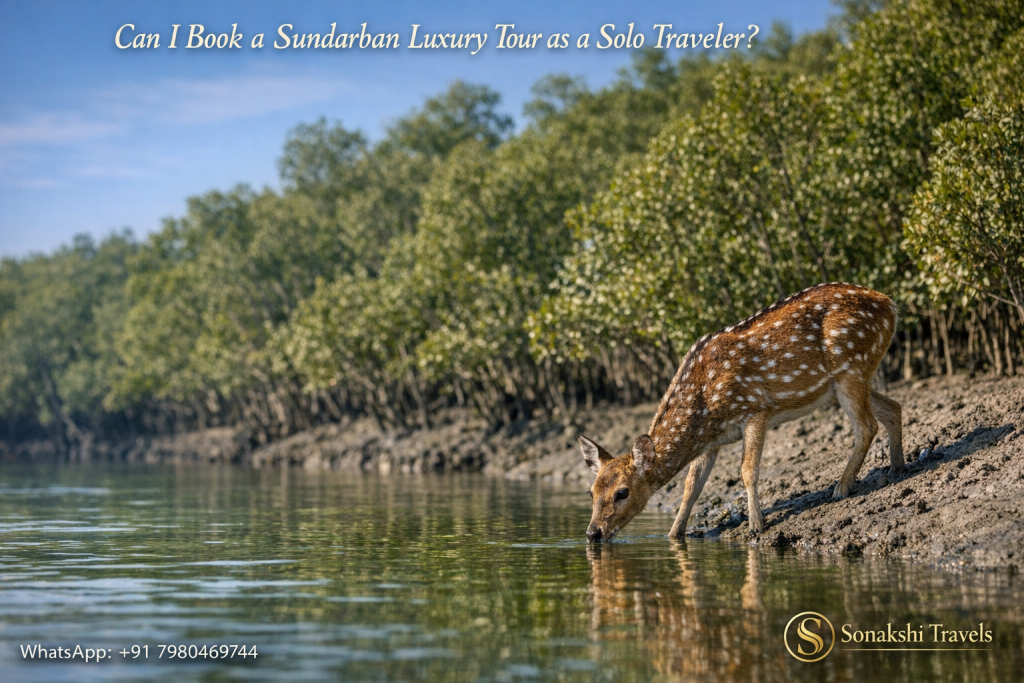
The decision to travel alone into a protected mangrove ecosystem raises practical, psychological, and operational questions. Unlike urban destinations or conventional wildlife parks, the Sundarban functions within a tightly regulated framework where permits, licensed vessels, authorized forest guides, navigation protocols, and safety compliance measures shape the visitor experience. For a solo traveler, this level of structure can seem complex at first glance, especially without a clear information base such as the broader guidance available through SundarbanTravel.com’s reference.
Yet the structure that governs this landscape is also what makes a refined solo journey viable—and, for many independent travelers, particularly suitable. When the trip is arranged under a professionally managed comfort-led format, solo travel becomes not only feasible but deeply absorbing. The central question is less about permission or possibility, and more about how carefully the experience is designed.
Understanding the Operational Reality of Solo Travel in a Regulated Ecosystem
Solo travel typically implies autonomy—designing one’s schedule, moving independently, and handling decisions without external coordination. In the Sundarban, however, independent navigation within protected forest zones is neither permitted nor sensible. Access is regulated, routes are controlled, and entry depends on registered boats, licensed crew, and authorized guides who operate within defined operational rules.
For a solo traveler, this means the experience is never “unassisted” in the literal sense. Even when traveling alone, you remain supported by an operational framework that is standardized, accountable, and built for compliance. A well-structured plan integrates permits, vessel checks, and onboard safety procedures into one coherent system—similar to how a professionally curated tour program for the Sundarban centralizes coordination so the guest does not have to manage administrative details independently.
The result is a helpful paradox for solo travelers: you travel alone, yet you are not left to solve the region’s operational complexity on your own.
Why Luxury Structuring Matters More for Solo Travelers
Luxury in the Sundarban context is not simply a matter of décor or comfort cues. It functions as operational precision: controlled boat capacity, experienced navigators with route familiarity, hygienic food preparation systems, and quality-assured accommodation standards. When traveling alone, these safeguards matter more because there is no companion to share decision-making or troubleshoot uncertainties.
Travel psychology research consistently associates solo travel in unfamiliar environments with higher situational alertness. That heightened awareness can enrich observation, but it can also produce low-grade stress when logistics remain unclear. A comfort-led model reduces that strain by making the environment predictable: meals are planned, movement is coordinated, and safety systems are transparent, aligning naturally with the standards expected in a purpose-built privately managed Sundarban tour where operational clarity is treated as part of the guest experience rather than an afterthought.
When the basic structure is stable, a solo traveler can allocate attention to what actually matters in a mangrove landscape: observation, reflection, and interpretive learning.
Personal Space Without Isolation
Group-Based Luxury Tours for Solo Guests
One practical option for solo travelers is joining a small, professionally managed group within a comfort-oriented setup. This format preserves personal space while allowing measured social contact. Operational realities—particularly vessel capacity and regulated movement—tend to keep group sizes modest, which naturally reduces crowd dynamics and maintains a quieter travel atmosphere.
For solo travelers who appreciate conversation but do not want constant engagement, this model creates balance. Shared safari hours often lead to natural, low-pressure interaction—exchanging observations, identifying species, or discussing how the landscape shifts across waterways—while private personal time remains protected, especially during rest periods and meals.
Private Luxury Arrangements for Complete Autonomy
Alternatively, some solo travelers prefer an exclusive arrangement where boat, guide, and accommodation are dedicated to a single guest. This structure maximizes schedule flexibility and interpretive depth. Observation pauses can be extended without group negotiation, and the pace of the day can follow the traveler’s preferred rhythm rather than collective momentum.
For researchers, writers, photographers, or travelers who value silence as part of the experience, exclusivity turns the journey into focused immersion. In practice, this format is less about “more luxury” and more about control over attention—an important distinction for solo travelers seeking depth rather than constant activity.
Safety Architecture in Luxury Solo Travel
Safety is a primary concern for independent travelers in remote landscapes, and in the Sundarban it operates across ecological, navigational, and infrastructural layers. The environment is not dangerous because it is sensational; it is complex because it is regulated, tidal, and ecologically sensitive. That complexity demands disciplined movement and informed conduct.
Professional operators implement safety architecture as a system rather than a checklist. Licensed forest guides accompany excursions, crews are trained for river movement, boats carry basic safety equipment, and routes follow authorized corridors. Accommodation standards also matter: secure premises, reliable meal hygiene, and predictable support channels reduce risk exposure for a traveler without companions.
For a solo traveler, this structure removes ambiguity. You are not relying on informal arrangements or uncertain practices; you are operating within supervised systems where accountability is clear. Importantly, safety here does not restrict experience—it defines the boundaries within which meaningful exploration remains responsible.
Psychological Depth of Solo Experience in a Mangrove Landscape
Solo travel in a mangrove delta has a distinct psychological rhythm. The landscape encourages slower attention: water movement, root patterns, and long stretches of quiet shift the traveler from consumption to observation. Without the constant stimulus of urban environments, the mind often becomes more attentive to subtle cues and natural variation.
Studies on solo travel frequently note that quiet natural settings amplify internal dialogue. With reduced social noise, perception sharpens: bird calls become distinguishable, minor ripples register as movement, and changes in light over mudflats become visible detail rather than scenery. This heightened awareness is not merely romantic; it is a cognitive shift that many solo travelers seek deliberately.
A comfort-led structure enhances that depth by removing friction. When food, rest, and safety are reliably managed, mental bandwidth expands. The experience becomes less about managing the trip and more about staying present within it—an important difference for solo travelers who value immersion over constant stimulation.
Cultural Engagement Without Social Overwhelm
Solo travelers often approach cultural encounters cautiously, particularly in rural settings where social norms may be unfamiliar. In a structured comfort-oriented tour, cultural interactions are typically facilitated by knowledgeable guides who provide context, maintain respectful boundaries, and ensure that engagement is ethical rather than intrusive.
This mediation matters because it changes the nature of cultural exposure. Instead of turning village visits or cultural evenings into informal spectacle, the guide frames what is seen and heard—local narratives, occupational realities, and community relationships with the landscape—so the solo traveler can understand rather than merely observe. For an individual traveler, that interpretive layer often reduces social discomfort while increasing meaningful connection.
Economic Considerations for Solo Luxury Travelers
Cost efficiency is a realistic concern for solo travelers because many higher-comfort arrangements are priced around double occupancy. However, structured single-occupancy provisions and adjustable private formats are increasingly common, particularly when an operator is accustomed to managing independent guests with clear expectations.
While solo luxury travel may have a higher per-person price than shared formats, it can deliver concentrated value: focused guide attention, predictable service standards, and continuity of comfort without compromise. For many solo travelers, the evaluation is not purely numerical; it includes return in privacy, reduced uncertainty, and the ability to move through a regulated environment without administrative burden.
From an experiential standpoint, paying slightly more for operational clarity can be rational—especially when traveling alone in a landscape where informal shortcuts are neither appropriate nor comfortable.
Decision Framework: Is a Sundarban Luxury Tour Suitable for You as a Solo Traveler?
The suitability of a luxury-format Sundarban journey depends on intent. Travelers seeking nightlife, dense urban energy, or constant entertainment may find the environment too restrained. However, those motivated by ecological observation, reflective immersion, and guided interpretation often discover that traveling alone intensifies attention and improves the quality of engagement.
Ask the following:
- Do you value guided interpretation over independent navigation in regulated environments?
- Do you prefer structured safety without sacrificing personal freedom?
- Are you comfortable with quiet environments that encourage introspection?
- Do you seek depth rather than speed in travel experiences?
If the answers are affirmative, solo travel in a comfort-led Sundarban setting is likely to align with your preferences. If you want a baseline understanding of how guided exploration is typically framed, reviewing the broader outline of a professionally guided Sundarban tour experience can help clarify what “structured autonomy” looks like in practice.
The Role of Professional Operators in Solo Luxury Travel
Professional agencies such as Sonakshi Travels influence the solo traveler’s experience in ways that go beyond reservations. They coordinate permits, ensure vessel compliance, assign qualified guides, and standardize hospitality expectations. In regulated landscapes, that coordination is not a convenience; it is the foundation of a functional journey.
For a solo guest, professional mediation transforms uncertainty into structure. Pre-trip communication defines what is included, what is controlled by regulation, and what can be tailored. On-ground coordination reduces friction during transitions between activities and accommodation, while consistent support channels create reassurance for a traveler who is not sharing responsibility with companions.
When traveling alone, accountability matters. A clearly responsible operator becomes a practical safety net—not in a dramatic sense, but as an operational guarantee that the trip is being managed competently.
Reframing the Question
The inquiry, “Can I book a Sundarban luxury tour as a solo traveler?” ultimately reframes itself. The more useful question becomes: what form of independence do you want? If independence means unstructured self-management in a protected, regulated environment, the model is unsuitable. If independence means personal exploration within professionally managed boundaries, the model becomes highly effective.
In this sense, luxury does not diminish autonomy; it refines it. It prevents solitude from turning into avoidable stress, and it ensures that quiet becomes intentional rather than accidental. For travelers who value control over pace and depth, a carefully managed format can be the most reliable way to travel alone without feeling exposed.
For solo travelers who want to keep the experience compact without losing comfort standards, some choose a short program such as a one-night two days Sundarban tour package, because it concentrates logistics into a manageable time frame while still preserving the core advantages of professional structure.
Conclusion
Yes, a Sundarban luxury tour can be booked and experienced fully as a solo traveler. More importantly, when structured correctly, it can provide a uniquely concentrated form of immersion. The combination of regulated ecological management, professional guidance, controlled group sizes, and consistent hospitality standards creates a setting where independence and security function together rather than in conflict.
Solo travel in this landscape is neither reckless nor isolating when designed with care. It is contemplative, operationally supported, and psychologically spacious. With a competent operator and a clear understanding of how regulated ecosystems function, the journey becomes less about navigating complexity and more about engaging with depth and presence.
For travelers willing to prioritize quiet attention over spectacle, and structure over improvisation, a solo luxury-format Sundarban trip is not only possible—it is one of the most coherent ways to experience the region as an individual traveler.