Sundarban Private Tour Package for Photography, Birdwatching, and Wildlife Lovers
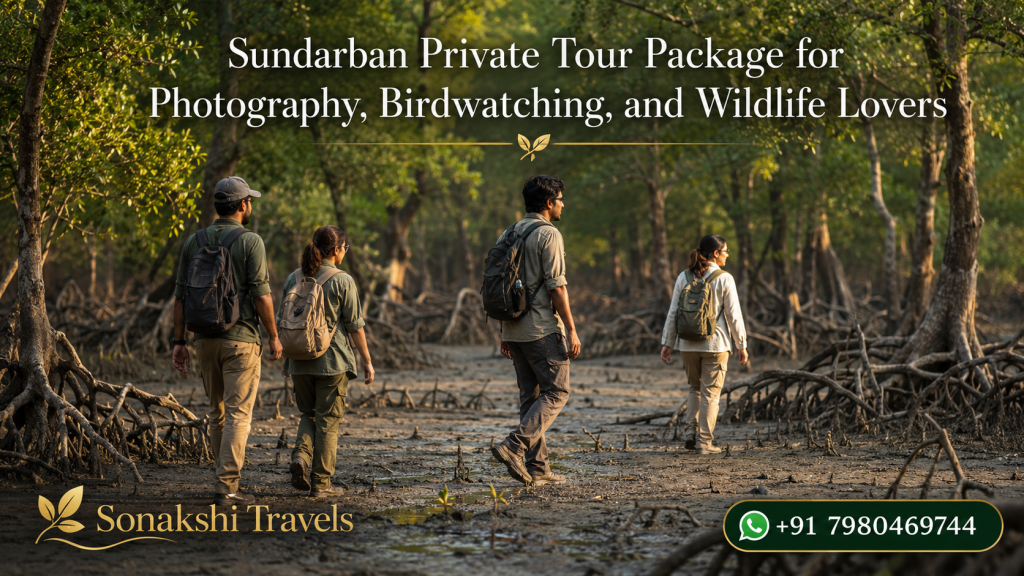
The Sundarban is not a usual forest destination where visitors simply enter a park, follow a fixed road, and return with a few quick memories. It is a living tidal world shaped by rivers, mangrove roots, mudflats, creeks, islands, changing light, and silent wildlife movement. For people who love photography, birdwatching, and wildlife, this landscape needs time, patience, privacy, and careful planning. That is why a Sundarban private tour package becomes especially meaningful for serious nature lovers.
A private tour gives travellers the freedom to move with a slower rhythm. Photographers can wait for the right light. Birdwatchers can stay longer near a promising creek. Wildlife lovers can enjoy the forest without unnecessary crowd noise. The Sundarban is not a place that always reveals itself quickly. It rewards quiet observation. It asks visitors to respect tide, silence, distance, and natural behaviour. A well-planned private journey helps travellers experience the mangrove forest in this deeper and more thoughtful way.
The idea behind Sundarban private tour package a better way to enjoy the tidal forest is closely connected with this need for personal space, flexible timing, and nature-focused travel. For photography, birdwatching, and wildlife observation, these details are not small comforts. They directly improve the quality of the experience.
Why a Private Tour is Better for Nature-Focused Travellers
In the Sundarban, the best moments often come without warning. A kingfisher may sit still on a branch for only a few seconds. A crocodile may slide from the mudbank into the water before the boat reaches closer. A spotted deer may appear between mangrove shadows and disappear almost immediately. In such a place, a fixed and rushed group schedule can feel limiting. A private Sundarban tour gives better control over time, pace, and attention.
For photographers, this means the boat can move more carefully when the light is good or when wildlife is active. For birdwatchers, it means less disturbance and more time near bird-rich zones. For wildlife lovers, it means the journey can focus on observation instead of hurried sightseeing. The Sundarban is not only about reaching popular watchtowers. It is also about reading the river, watching mudflats, listening to bird calls, and noticing movement along the mangrove edge.
A private arrangement also helps avoid the common problem of mixed travel interests. In a large group, some travellers may want music, quick photos, loud conversations, or fast movement from one point to another. A serious wildlife traveller needs the opposite. Silence, patience, and discipline are important. A private boat safari creates a more suitable environment for this type of travel.
Sundarban as a Photography Destination
The Sundarban offers a special style of photography. It is not only wildlife photography in the usual sense. It is also landscape photography, river photography, bird photography, forest texture photography, and documentary travel photography. The beauty of the region lies in its changing mood. Morning mist over the river, golden sunlight on mangrove leaves, fishing boats near distant islands, muddy banks marked by animal tracks, and birds flying across open water can all become strong visual subjects.
A Sundarban photography tour works best when the route and timing are planned carefully. Early morning and late afternoon light are very useful for clear and soft images. During harsh midday light, photographers may focus on details, boat life, mangrove patterns, local river activity, or shaded wildlife areas. Because the forest is tidal, the same place can look very different at different times of the day. A creek that appears full and wide during high tide may show mudbanks, roots, and feeding birds during low tide.
This changing nature makes the Sundarban highly rewarding for patient photographers. A private package helps because the traveller does not need to follow a rigid crowd schedule. The boat can slow down near a promising frame. The guide and boatman can help identify safe viewing positions. The photographer can spend more time composing images instead of taking quick snapshots from a moving boat.
Best Subjects for Photography in the Sundarban
The Sundarban gives many strong subjects for nature and travel photography. Birds are among the most reliable subjects because different species are often seen around creeks, riverbanks, trees, and mudflats. Kingfishers, egrets, herons, storks, raptors, and water birds can offer excellent frames. Mangrove roots are also beautiful subjects because they create natural patterns across the muddy ground.
Wildlife photography in the Sundarban requires realistic expectations. The Royal Bengal Tiger is the most famous animal of the region, but tiger sighting is never guaranteed. The forest is dense, the terrain is difficult, and animals move according to tide, safety, and natural instinct. However, this does not reduce the value of the tour. The Sundarban is rich in signs of life. Spotted deer, wild boar, crocodiles, monitor lizards, mudskippers, crabs, and birds often create meaningful wildlife moments. For a true photographer, these subjects are also important parts of the ecosystem.
Human life around the mangrove region can also be photographed with sensitivity and respect. Local boats, river crossings, fishermen, village edges, and simple island life show the close relationship between people and the tidal forest. A thoughtful wildlife photography tour in Sundarban should balance forest images with river culture and ecological storytelling.
Sundarban for Birdwatching Lovers
The Sundarban is a highly interesting destination for birdwatchers because it combines forest birds, water birds, mudflat birds, raptors, and seasonal visitors. The tidal nature of the region creates different feeding zones. Mudflats attract waders and water birds. River channels support kingfishers and fishing birds. Mangrove branches provide perching places for many species. Open sky and forest edges may also bring raptors into view.
A Sundarban birdwatching tour requires calm movement and careful observation. Birds are sensitive to sound and sudden disturbance. In a private tour, the boat can move quietly and stop at a proper distance. The guide can help identify common and special species. Birdwatchers can take time to observe behaviour, not only record names. Feeding, calling, flying, resting, and territorial movement all become part of the experience.
Winter and the cooler months are often preferred by birdwatchers because visibility is usually better, the weather is more comfortable, and migratory movement may add variety. However, resident birds can be seen in different seasons. The best birdwatching experience depends not only on the month, but also on tide timing, route planning, patience, and the quality of local guidance.
Why Private Boat Timing Helps Birdwatching
Birdwatching is not successful when a boat is always in a hurry. Many birds need time to settle after a boat approaches. If the boat keeps moving fast, the visitor may see only flying shapes instead of clear details. A private boat allows slower movement. It also allows the traveller to spend longer near areas where bird activity is high.
For example, if a mudflat is active with feeding birds, a birdwatcher may want to observe patiently from a respectful distance. If a kingfisher is repeatedly diving near a creek, a photographer may want to wait for a good action frame. These moments are difficult in a general group tour. A private birdwatching tour gives the needed freedom without disturbing other travellers who may not share the same interest.
Wildlife Observation in a Tidal Forest
Wildlife watching in the Sundarban is different from wildlife watching in dry forests or grasslands. There are no open jeep tracks through the core mangrove forest. The safari is mainly done by boat through rivers and creeks. This means the visitor observes the forest from water. The experience is slow, wide, and silent. One must look carefully at riverbanks, mangrove gaps, mud marks, tree lines, and animal movement.
A Sundarban wildlife tour is not only about seeing one famous animal. It is about understanding a complete tidal ecosystem. The Royal Bengal Tiger is the top attraction, but the Sundarban also supports reptiles, birds, fishes, crabs, deer, wild boar, and many smaller life forms that help maintain the natural balance. The forest is alive in visible and hidden ways.
Private travel helps wildlife observation because the guide can explain signs and behaviour in detail. Paw marks on mud, deer alarm calls, bird movement, crocodile basking spots, and tide lines can all become part of learning. For wildlife lovers, this kind of interpretation makes the journey much richer than simple sightseeing.
Realistic Expectations About Tiger Sightings
Many travellers come to the Sundarban with the hope of seeing the Royal Bengal Tiger. This hope is natural because the tiger is the most powerful symbol of the mangrove forest. However, it is important to understand that tiger sightings in the Sundarban are rare and unpredictable. The forest is dense, the animals are extremely alert, and the landscape gives them many places to remain hidden.
A responsible Sundarban private tour package should never promise tiger sightings. Instead, it should offer the best possible conditions for patient wildlife observation. This includes proper routes, experienced local support, quiet boat movement, and enough time inside permitted safari zones. When travellers accept the forest on its own terms, they enjoy the journey more deeply. Even without a tiger sighting, the Sundarban can offer powerful wildlife memories through birds, crocodiles, deer, reptiles, and the mysterious atmosphere of the mangrove channels.
How the Tidal Forest Shapes the Experience
The Sundarban is controlled by tide. Water rises and falls through a complex network of rivers, creeks, and channels. This tidal movement changes the look and behaviour of the forest. At high tide, water reaches the mangrove roots and boats can move through certain channels more easily. At low tide, mudflats become visible and many birds may come to feed. Reptiles may rest on exposed banks, and animal tracks may become clearer.
This is why the phrase a better way to enjoy the tidal forest is important. A private tour can be adjusted around tide conditions more thoughtfully than a very fixed group plan. The boatman and guide can decide where movement is practical and where observation may be better. For photographers and birdwatchers, this flexibility is valuable because tide affects light, subject position, background, and wildlife activity.
Travellers who choose a private tour designed for enjoying the tidal forest can experience the Sundarban with more attention to natural rhythm. This style is especially suitable for people who want more than a checklist of places.
Important Places and Safari Zones for Nature Lovers
Several places in the Sundarban are commonly included in private tour routes, depending on permission, timing, package duration, tide, and local conditions. Watchtowers and forest interpretation points help travellers observe the mangrove environment safely. Creeks and river routes add the real safari feeling. For photography and birdwatching, the journey between points can be as important as the points themselves.
Sajnekhali is often known for forest office facilities, interpretation, and birding possibilities around the area. Sudhanyakhali is popular among travellers because it offers a chance to observe forest edges and nearby wildlife movement. Dobanki is known for its canopy walk experience, where visitors can get a different view of the mangrove environment from a protected structure. Other river routes and creeks may offer bird activity, open water views, and strong photographic frames.
A private package gives better scope to plan these places according to interest. A casual traveller may want only famous points. A photographer may want better light. A birdwatcher may want quieter areas. A wildlife lover may want more time scanning the forest edge. The same destination can be experienced very differently depending on the style of travel.
Best Duration for Photography, Birdwatching, and Wildlife Lovers
For a serious nature-focused journey, a single day is often too short. It can provide a quick introduction, but it does not give enough time for changing light, tide movement, and deeper wildlife observation. A 1 night 2 days plan is better for travellers with limited time, especially if they want a short private escape from Kolkata. However, a 2 nights 3 days package is usually more suitable for photography, birdwatching, and wildlife lovers.
A 2 nights 3 days Sundarban private tour gives more safari hours, better chances for morning and afternoon photography, and a calmer pace. It also reduces the pressure of trying to see everything in a hurry. Travellers can enjoy sunrise views, river movement, birdwatching sessions, village-side atmosphere, and multiple forest routes with greater comfort.
For highly focused photographers or wildlife enthusiasts, an extended plan may be even better. More time in the forest increases the chance of unusual moments. It also allows the traveller to understand the ecosystem more clearly. The Sundarban is not a destination that should be rushed if the purpose is observation and serious nature experience.
What a Good Private Package Should Include
A good Sundarban private tour package for wildlife lovers should be designed around comfort, safety, guidance, and nature time. Private car transfer from Kolkata can make the journey smoother, especially for photographers carrying camera bags, tripods, lenses, and personal equipment. A private boat is important because it creates the main difference in the safari experience.
The package should also include proper meals, clean accommodation, forest permissions as applicable, boat safari arrangements, and local guide support. For birdwatchers and photographers, the guide should understand the value of silence and slow movement. The boat crew should also be experienced in tidal routes and safe forest-side navigation.
Accommodation does not need to be overdecorated, but it should be clean, comfortable, and suitable for rest after long hours on the boat. Wildlife travellers often start early and return tired. Good food, clean rooms, and reliable service help them remain fresh for the next safari session.
Why Guide Quality Matters
In a place like the Sundarban, a guide is not only a person who shows locations. A good guide helps travellers understand the forest. The guide explains tide, animal signs, bird movement, local ecology, safety rules, and permitted behaviour. For photographers, the guide may help identify good observation points. For birdwatchers, the guide may help locate common species and explain habitat preferences.
Guide quality becomes more important in a private tour because the journey can be shaped around the traveller’s interest. If the traveller is interested in birds, the guide can give more attention to bird-rich areas. If the traveller is focused on wildlife signs, the guide can explain mud marks, alarm calls, and movement zones. This makes the trip educational as well as enjoyable.
Responsible Travel for Serious Nature Lovers
The Sundarban is a sensitive ecosystem. Responsible behaviour is not optional here. Photographers should avoid disturbing birds or animals for the sake of a better photo. Birdwatchers should maintain distance and avoid loud calls or playback sounds that may disturb natural behaviour. Wildlife lovers should remember that the forest is not a stage for human entertainment. It is a protected natural home.
A responsible Sundarban wildlife safari respects forest rules, boat discipline, waste control, and local guidance. Plastic should not be thrown into rivers or villages. Loud music should be avoided. Feeding wildlife is harmful and should never be done. Travellers should also respect local communities who live near the forest and depend on the river landscape for their daily life.
Private tours are helpful because they can follow a quieter and cleaner travel style. When the group is small and serious, it is easier to maintain discipline. This creates a better experience for travellers and less disturbance for the forest.
Camera and Field Preparation for the Sundarban
Photography in the Sundarban needs preparation because the journey happens mainly on water. A camera with a zoom lens is useful for birds and distant wildlife. A wider lens can help capture river landscapes, boat scenes, and mangrove patterns. Extra batteries and memory cards are important because charging options may not always be available during long safari hours. A waterproof bag or dry cover is helpful to protect equipment from river spray, moisture, and sudden weather changes.
Binoculars are highly useful for birdwatching and wildlife scanning. A notebook or mobile note app can help record bird names, behaviour, time, and location. Light cotton clothing in natural colours is better than bright clothing. Sunscreen, cap, sunglasses, and basic personal medicines are useful. However, travellers should avoid carrying unnecessary heavy items on the boat.
The most important preparation is mental. The Sundarban needs patience. A traveller may wait long for one good frame. A bird may remain partly hidden. A crocodile may be too far for a perfect shot. The joy lies in observation, learning, and respecting the natural pace of the forest.
Who Should Choose This Type of Package
This type of private package is ideal for travellers who enjoy slow nature travel. It is suitable for wildlife photographers, birdwatchers, nature bloggers, documentary-style content creators, families who love forests, senior travellers who prefer comfort, and small groups who want a peaceful tour. It is also a good choice for travellers who have already done regular sightseeing tours and now want a deeper Sundarban experience.
A private luxury Sundarban tour can also be suitable for guests who want comfort without losing the real forest feeling. Luxury in this context should not mean artificial decoration or loud entertainment. It should mean privacy, cleanliness, careful service, good food, better timing, and a more thoughtful safari plan. For nature lovers, true luxury is time, silence, and access to meaningful observation.
Travellers looking for this style can explore Sundarban private tour package a better way to enjoy the tidal forest as a relevant concept for planning a quieter and more focused mangrove journey.
A Sundarban Private Tour Package for Photography, Birdwatching, and Wildlife Lovers is much more than a normal holiday plan. It is a carefully paced journey into one of the world’s most unique mangrove landscapes. The value of this tour lies in privacy, patience, silence, flexible timing, and better observation. For a photographer, it offers changing light, rare frames, birds, river moods, and mangrove textures. For a birdwatcher, it offers quiet creeks, mudflats, water birds, raptors, and seasonal variety. For a wildlife lover, it offers the deep mystery of a tidal forest where every sound, mark, and movement has meaning.
The Sundarban should not be treated as a rushed sightseeing destination. Its real beauty appears slowly. The forest speaks through tide, wind, bird calls, muddy banks, roots, shadows, and sudden wildlife signs. A private tour allows travellers to listen to that language with care. It gives space to observe, learn, photograph, and respect the forest.
For those who want a deeper nature experience near Kolkata, a well-planned Sundarban private tour is one of the best ways to explore the mangrove world. It offers comfort without losing authenticity, freedom without ignoring safety, and adventure without disturbing the forest. That balance makes it the right choice for serious photography, birdwatching, and wildlife travel in the Sundarban.